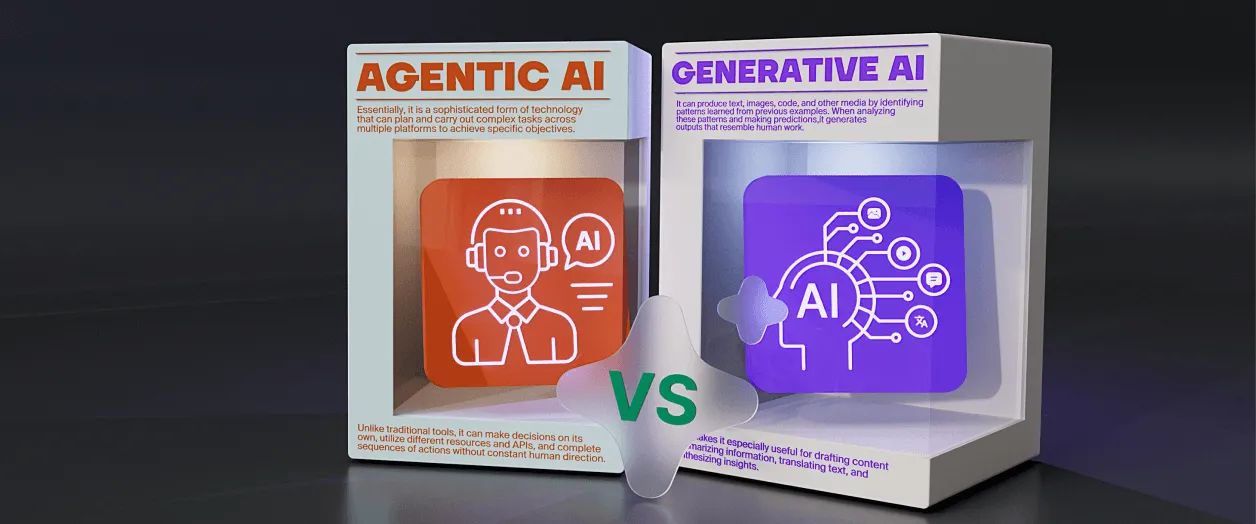
Have you noticed how many digital tools still struggle when a situation becomes slightly unpredictable? The agentic reasoning AI doctor stands out because it approaches problems with context, intention, and stepwise reasoning instead of simply reacting to inputs.
This shift matters more than most leaders realize. When you rely on tools that only follow preset patterns, your team ends up compensating for their gaps. When you use a system that can evaluate a situation, choose the next step, and adjust its thinking, your operations start to feel steadier and far more dependable.

In this article, you will see what truly separates reasoning agents from traditional models, why this difference is becoming a competitive advantage, and what it means for businesses that want clarity, consistency, and stronger decision-making in complex environments.
Before you decide which direction is right for your organization, you need to understand the fundamental difference between a standard predictive model and an AI doctor.
Traditional tools resemble calculators. They receive an input, search for a predefined pattern, and produce a response. When the environment behaves exactly the way the model expects, everything works. When something unusual appears, the system loses clarity and ends up producing incomplete or unhelpful output.
Agentic artificial intelligence works differently. Instead of chasing a single instant response, it creates a chain of thoughts that mimics real problem-solving. It interprets context, decides which information is essential, and moves through the situation step by step. This produces a clearer, more reliable path, especially when the environment contains uncertainty

If you ever felt irritated when a voice assistant for healthcare misreads a request or gives an irrelevant recommendation, you already know the root of the problem. Traditional models rely heavily on patterns. They cannot ask clarifying questions, choose what is important, or monitor evolving context, which creates three main issues for businesses.
When a situation shifts slightly, examples of traditional AI do not know how to interpret the new conditions. They often produce vague or confusing output. Your team must waste time correcting and rechecking information instead of moving forward.
Since traditional tools struggle in unfamiliar circumstances, employees need to fill the gaps. This creates a frustrating experience because people end up handling exactly the repetitive work they hoped a digital tool would cover.
When the system relies on patterns, any inconsistency in the surrounding environment produces inconsistent results. Leaders cannot depend on the tool for tasks that require a steady level of precision.
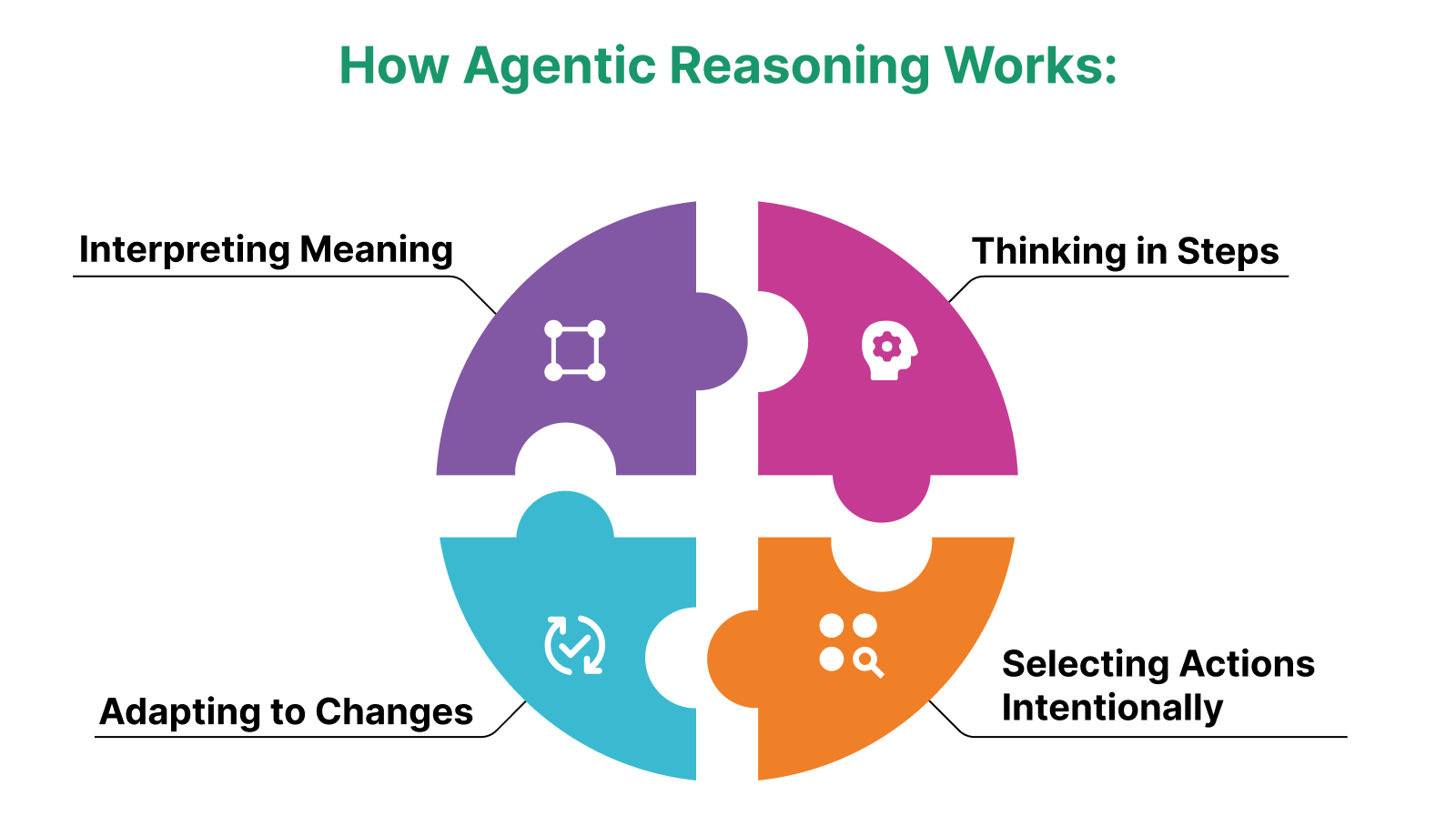
The best way to understand AI agent reasoning is to picture an experienced professional who uses logic and intention rather than memorized scripts.
Multi-agent reasoning takes the same approach. It begins by interpreting the situation. It identifies the central issue. It evaluates possible actions. It tests scenarios internally. It selects a path that is most appropriate for the conditions. It then continues adjusting its direction as new detailsappear.
This type of thinking relies on purposeful choice instead of reaction and creates the closest digital equivalent to a seasoned expert who evaluates circumstances, reasons about the right next step, and proceeds with purpose. To break it down even more clearly, the systems follow these principles.

To appreciate the difference fully, imagine your team facing an unusual request. A traditional model searches through its familiar patterns and picks the closest match it can find. When the situation falls outside what it has seen before, performance immediately drops, which mirrors what many organizations experience in practice. Recent research on workflow automation reported that firms can cut human resource costs by 20 to 50 percent when they rely on more advanced systems instead of pure pattern-matching tools, showing how much instability disappears when the system can truly interpret what is in front of it.
An LLM agent’s reasoning interprets the context, identifies the central issue, and works through the request even when nothing resembles its stored examples. This gives it the flexibility that older tools simply cannot deliver.
The difference between agentic AI and traditional AI is that tools built on the old way act almost like pattern-matching machines. They don’t truly understand what’s happening, but instead, they simply look for familiar inputs and map them to familiar outputs.
And then there’s the reasoning-first model, the foundation behind the new generation of capabilities, which helps answer the question of how agentic AI differs from traditional AI in both approach and performance.

The capabilities of an AI agent's reasoning go far beyond simple prediction. It can evaluate a situation, choose the next step, and adjust its reasoning as the environment evolves. Traditional models cannot do this. Consider the following advanced behaviors that genuinely impact day-to-day operations.

Imagine your team needs to process an unusually complex case with multiple interconnected factors. A use case for traditional AI example highlights how older tools struggle because they only know how to repeat patterns they have memorized. A digital doctor interprets the bigger picture and chooses the right sequence of steps.
Or imagine your team must review information that arrives in several disconnected pieces. Traditional AI cannot bring them together into a coherent understanding. Such an approach evaluates the relationships and forms a clear interpretation.
This difference matters most when the stakes are high and mistakes cost time, money, or credibility.
Hospitals repeatedly report the same experience. Once they adopt a reasoning-enabled system, everyday operations feel steadier because the tool behaves in a way that mirrors real problem-solving rather than robotic reaction.

Hospitals and medical facilities rarely adopt new tools just because they look impressive on the surface. When developing healthcare technology solutions, they are far more interested in stability, clarity, and long-term reliability, which is why agent reasoning continues to gain traction among organizations that value predictable performance and smooth collaboration across teams.
Pattern-based tools often behave unpredictably, producing polished results in one moment and confusing output in the next simply because a request was phrased differently or placed in an unfamiliar context.
As a recent AI trend in healthcare, a reasoning-driven approach follows a clear line of logic rather than relying on memorized patterns, which allows it to reach conclusions in a structured and methodical way regardless of how the input is delivered. Leaders appreciate this because it reduces variability, keeps performance steady across a wide range of scenarios, and ensures that the output remains aligned with the intended goal even when the situation becomes more nuanced.
Many teams know the frustration of spending hours reviewing, correcting, and polishing the output generated by older tools, which is a classic use case of traditional AI. The effort required to bring those results up to professional standards often erases any time savings the tool was meant to provide. AI medical scheduling significantly reduces this burden because it works through the task step by step, taking into account the context, constraints, and purpose behind each request.
As a result, the output tends to arrive in a form that requires far fewer adjustments, allowing staff to review rather than overhaul the final result and freeing the organization from the constant cycle of rework that slows down progress.
Workflows can easily break down when people and tools interpret information differently, especially in fast-moving environments where context evolves quickly. Traditional AI examples struggle with these shifts because they cannot follow the underlying reasoning of a conversation or adapt their responses when circumstances change.
A reasoning-driven approach helps bridge this gap by interpreting the situation more holistically, allowing it to participate in the workflow more naturally and communicate in a way that aligns with human expectations. This creates a smoother and more collaborative working relationship, where teams spend less time clarifying instructions and more time moving projects forward with confidence.
Every executive understands that processes are constantly in motion: regulations change, internal procedures evolve, and priorities shift based on new market conditions. Older tools often fall behind in these moments because they rely on static rules or memorized examples that cannot accommodate shifting requirements without significant updates.
Telemedicine apps handle change with far greater resilience, adjusting their approach as new information becomes available and recalibrating their responses without losing clarity or consistency. This adaptability gives leaders a sense of long-term security, making it easier to plan investments, manage risk, and ensure that their operations remain stable even as their environment continues to evolve.

You may sometimes wonder whether you are ready for this level of automation, especially when considering agentic AI vs traditional AI. The answer depends on preparation. Start by clarifying your biggest bottlenecks. The more precise your goals, the easier it becomes to guide the AI voice assistant. Next, evaluate which parts of your processes involve repetitive decision-making, as these are often ideal entry points for automation.
Then, map out your existing workflows and identify where fragmentation or frequent misunderstandings occur. These areas benefit significantly from a digital tool that interprets context. Finally, prepare your team by explaining what the new system can do and how it works, because people adopt new technologies more enthusiastically when they understand the purpose behind them.

Many concerns come from outdated beliefs about how digital tools work. In reality, modern automation delivers measurable results. Recent research shows that implementing automated workflows can reduce processing time by about 31%, even in complex environments. Once you separate the myths from the reality, adoption becomes far easier.
Many leaders worry about how an AI agent for doctors behaves when the situation becomes complex or ambiguous. Traditional systems tend to falter in these conditions because they rely heavily on familiar patterns, and when those patterns are missing, their output becomes inconsistent.
Executives want reassurance that the tool will continue to operate with clarity even when the input is unusual, incomplete, or less structured. AI in the healthcare business helps resolve this concern by following a deliberate thought process that mirrors how a human specialist would break down a complex issue, allowing the outcome to remain steady and dependable even when the task demands deeper interpretation.
Another common question for AI healthcare companies for business revolves around visibility. Leaders do not want a system that produces results without showing the reasoning behind them, especially when decisions carry operational or strategic weight. They need to understand how the conclusion was reached so they can verify it, trace it, and justify it when necessary.
The doctor's note AI agent eases this concern by documenting its steps, making it easier to review the logic and confirm that each part of the process aligns with organizational expectations. This transparency strengthens trust and simplifies oversight without requiring teams to intervene at every step.
Executives also express concerns about how smoothly the tool will work alongside their staff. Older systems often create friction because they misinterpret instructions or fail to recognize subtle cues that humans intuitively understand. This leads to confusion, repeated clarifications, and a heavier management burden than anticipated.
The doctor AI agent addresses this by interpreting the broader context, adjusting its responses as new information appears, and communicating more naturally with the people who rely on it. The result is a more harmonious working relationship that supports, rather than disrupts, day-to-day collaboration.
The role of artificial intelligence in healthcare business long-term viability is one of the biggest considerations for leaders. Processes change, regulations shift, and internal expectations evolve. Traditional systems struggle under these conditions because they are tied closely to static rules or rigid pattern recognition, which quickly becomes outdated.
Leaders want confidence that the tool will not require constant reconstruction to remain useful. Cloud healthcare software responds to this concern by adapting its approach as conditions shift, adjusting its logic with far greater flexibility, and maintaining stability even as workflows grow more complex. This gives leadership a sense of future-proofing and reduces the burden of ongoing maintenance.
An AI agent doctor gives your organization something traditional tools have never offered. It brings purpose, structure, and logic into every step of the process. It reduces the constant back and forth that slows your staff. It improves consistency and raises confidence. It also adapts as your operations evolve, creating long-lasting value rather than a short-lived novelty.
When your team receives support that thinks instead of reacts, your entire environment becomes calmer, faster, and more predictable. Leaders gain clarity. Staff regain time. Workflows feel smoother. The overall impact is far more meaningful than the incremental improvements offered by pattern-based systems.
The future belongs to organizations that choose tools capable of true reasoning. Once you experience the difference, traditional models feel like relics from another era.


Tech & Innovation Expert
Anastasiya is committed to making the complex simple. Her passion for writing, proficient research, and strong interviewing skills allow her to share in-depth insights into the ever-evolving IT landscape.

Our newsletter is packed with valuable insights, exclusive offers, and helpful resources that can help you grow your business and achieve your goals.