Are rising costs, production delays, and unpredictable demand starting to feel like the new normal in your business? If so, it may be time to look toward AI manufacturing companies for smarter, more sustainable ways to run operations and protect your margins.
It becomes increasingly clear that the gap between current performance and growth targets is widening rather than narrowing. You face constant pressure to deliver faster, reduce waste, maintain quality, and keep customers satisfied. At the same time, labor shortages, supply chain instability, and legacy systems make every improvement more complex and more expensive than it needs to be.

If you are evaluating your next strategic investment, this article will help you identify partners capable of delivering measurable business impact instead of empty technical promises. In this blog you will discover the top AI manufacturing companies helping industrial organizations modernize operations, strengthen resilience, and build a foundation for long-term growth.
At its core, manufacturing AI companies utilize advanced algorithms and machine learning to analyze operational data, uncover patterns, generate forecasts, and continuously refine how production runs. Instead of depending only on fixed rules, it evaluates live information and adjusts as it learns from real conditions on the shop floor.
Interest in these capabilities is accelerating, as indicated by McKinsey & Company's recent industry research, which shows that 62% of organizations are already experimenting with intelligent agents, exploring how autonomous decision systems can support operations. Companies are seeing significant progress at the use-case level, reporting both cost reductions and revenue gains, while 64% say generative AI is actively driving innovation inside their organizations.
Think of it as adding a powerful analytical engine to your production environment where traditional systems could only follow predefined instructions. However, the automated technology examines real-time data across equipment, sensors, PLCs, SCADA platforms, quality tools, and ERP systems to uncover trends and inefficiencies that would otherwise stay hidden.
It’s only natural to try your best to deliver more output, higher quality, and faster turnaround times while keeping costs under control. Still, disruptions hit without warning. One delayed shipment or an unplanned machine stoppage can ripple across your entire operation.
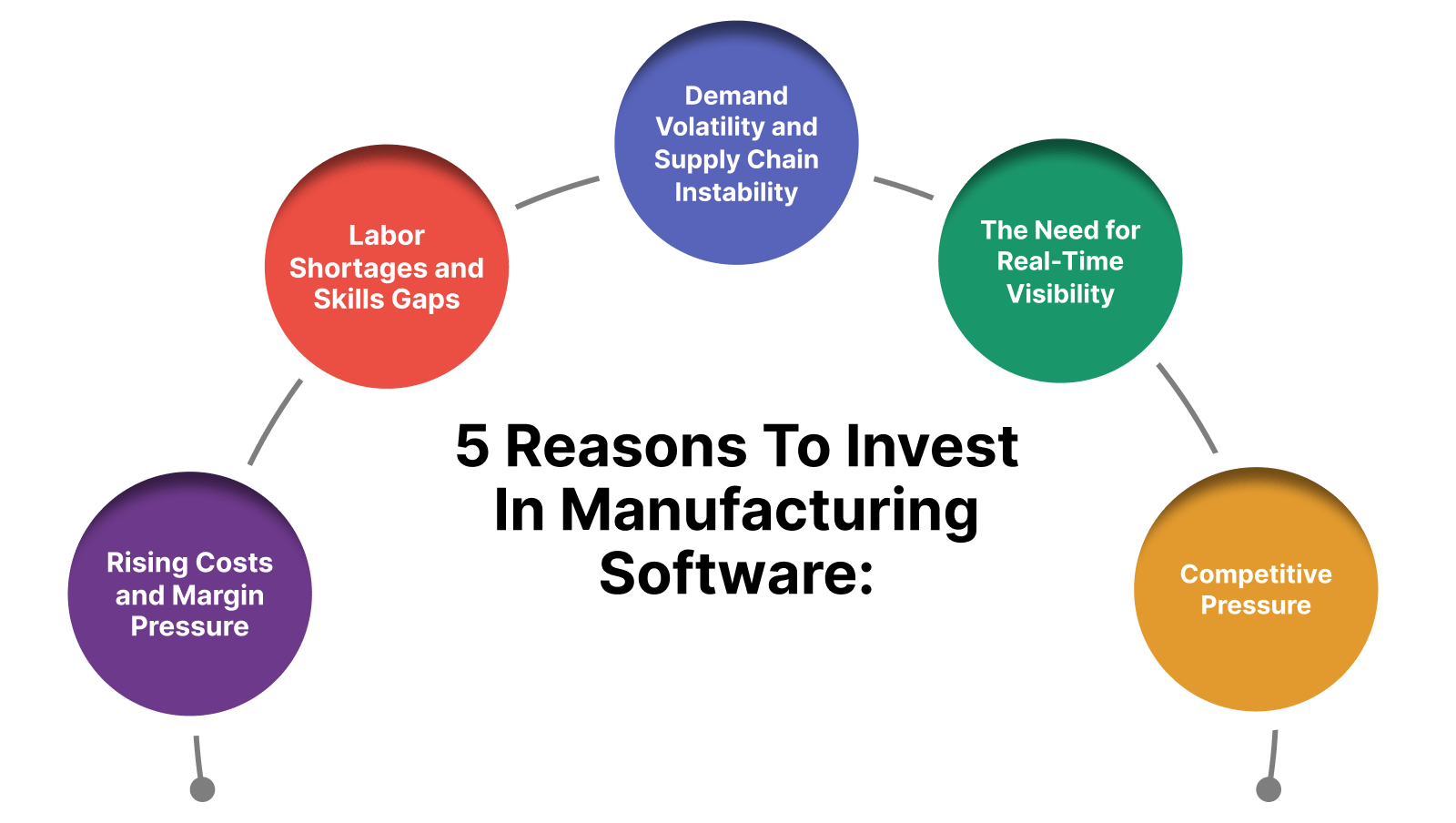
That’s when it’s time to broaden your horizons and take a new step in your business approach. Let’s look at the main reasons and pain points that may push you to rethink your company’s technological approach.
Unfortunately, energy prices fluctuate, raw materials spike and labor becomes more expensive and harder to find. Every inefficiency, even a small one, quietly eats into your profitability. Manual planning, disconnected systems, and reactive decision-making make it difficult to spot problems before they escalate. The priorities shifted, and now the clients are prioritizing the speed and short-term power of simply modernizing, but it's a flawed approach.
While experienced operators are retiring, recruiting and training new talent takes time and money. At the same time, US manufacturing employment has climbed to nearly 13 million workers, and the number of manufacturing establishments has grown more than 11% in recent years, reaching roughly 393,000 facilities. The sector is expanding fast, yet the talent pipeline is still under pressure.
Sometimes customer expectations shift rapidly, orders fluctuate and suppliers face delays. And without accurate forecasting and clear visibility across your operation, planning becomes guesswork. You either overproduce and tie up capital or underproduce and risk losing clients. That is why investing in predictive planning capabilities allows you to respond proactively instead of constantly putting out fires.
Can you see exactly what is happening across all facilities at any given moment? Many entrepreneurs and managers cannot. Information often sits in separate systems that don’t communicate, and by the time reports reach your desk, the chance to act has often passed. One of the best examples of automation in manufacturing is Siemens’ Amberg Electronics Plant. Every stage of production is tracked and analyzed in real time using digital twins and intelligent analytics. Thus, continuous visibility allows the team to catch issues before they escalate, maintain quality above 99%, and make decisions based on accurate, up-to-the-minute information rather than guesswork.
One sure fact is that your competitors are not standing still. Some are already leveraging advanced technologies and AI voice assistants to reduce downtime, optimize scheduling, and improve quality control. Now faster than ever, the gap between digitally advanced software for manufacturing companies and traditional operations is widening. To remain competitive, you might need more than incremental improvements, such as a smarter operating model that supports growth, resilience, and long-term profitability.
The need for the innovations is clear, but what about the actual realization? You may feel a bit lost with so many aspects to consider, expenses to calculate and options to choose from since this strategic decision will shape your operational performance for years. Here we listed some of the fundamental factors to pay attention to when looking for the perfect match for your company’s technological growth.
Your company environment is complex, and your partner must understand it deeply from the inside.
An individual approach to your case is crucial for reflecting your unique processes.
Make sure that they focus on integration, removing disconnected systems that slow your business down and limit visibility.
It is very important to have an eye for growth and continually strive towards expansion.
Providers with extensive practical experience and case studies have higher chances of fully understanding and completing your requirements.

Selecting the right manufacturing tracking software team can significantly influence how successfully your operations perform and evolve. Industrial businesses today face mounting challenges, including increasing costs, complicated workflows, equipment-intensive environments, and the constant demand to scale without interrupting production.
Below we put together the list of providers known for helping manufacturers overcome challenges and reach new levels of expertise, advancing further in the market.
At CleverDev Software, we bring years of experience delivering AI logistics solutions development for industrial and enterprise clients across multiple markets. We focus on your specific goals and operational challenges by carefully analyzing workflows, identifying bottlenecks, and evaluating system integrations to ensure every initiative aligns with real business needs.
Our expertise in AI manufacturing spans predictive maintenance programs that minimize unplanned outages, advanced production planning that increases scheduling precision, and automated quality monitoring that lowers defect rates and rework costs. We integrate seamlessly with ERP, MES, and other enterprise platforms to create a unified operational environment that supports faster, data-driven decision-making.
Every architecture we design is modular and scalable, enabling multi-site expansion and long-term growth. Our priority is to deliver measurable improvements in performance, efficiency, and operational control while ensuring your infrastructure remains adaptable as your business evolves.
Ciklum is a global AI consulting company manufacturing with a team of more than 3,500 professionals. Established in Denmark in 2002, the company delivers custom development and dedicated team services through its network of European offices.
With its size and expertise, Ciklum can allocate large development teams to enterprise manufacturers with significant technical demands. Its distributed delivery model, spanning multiple European development centers, offers flexibility for organizations that need to quickly scale development efforts while ensuring consistent technical quality and structured project management practices.
Softeq focuses on bridging the gap between physical operations and digital intelligence. In environments where machinery and equipment drive performance, their software development for manufacturing companies links devices, continuously monitors output, and anticipates potential issues before they disrupt production.
Their expertise in IoT solutions and embedded engineering gives industrial leaders a clear view of machine-level performance and overall operational efficiency. Real-time insights generated directly at the source allow teams to act quickly, prevent downtime, reduce material waste, and maintainconsistent productivity across the production floor.
Hexaware Technologies supports industrial organizations in modernizing operations and building systems that optimize performance. Their focus lies in practical implementation improving process efficiency, integrating enterprise platforms, and ensuring that operational insights are accessible and actionable.
Hexaware’s projects often emphasize sustainability and scalability. Businesses benefit from systems designed to grow with them while addressing the challenges of complex production environments.
N-iX provides software development for manufacturing companies seeking to modernize operations. Such an approach emphasizes scalable architecture, platform integration, and user-friendly systems that give management and operational teams visibility and control over processes.
N-iX combines technical expertise with AI in manufacturing industry understanding, allowing businesses to optimize planning, improve efficiency, and build systems capable of supporting future expansion without major overhauls.
Cognizant drives large-scale digital transformation for industrial enterprises, helping organizations modernize operations across multiple business units. They connect analytics, automation, and process optimization to create cohesive, efficient workflows that support strategic goals.
Combining methodical planning with hands-on execution, Cognizant ensures transformations deliver measurable results and lasting impact while staying fully aligned with overall business objectives.
Accenture specializes in large-scale transformation programs that help industrial organizations streamline operations, integrate advanced analytics, and connect systems across multiple sites.
Their global experience enables companies to implement best practices for industries benefiting from AI-driven automation while scaling efficiently, making them a strong partner for enterprises pursuing comprehensive digital strategies and measurable operational improvements.
Infosys works alongside industrial leaders to reshape operations through a combination of business strategy and digital engineering. Legacy systems evolve into modern, integrated environments powered by advanced analytics and connected platforms that improve visibility and responsiveness across manufacturing networks.
Large-scale transformation programs are structured to ensure technology investments translate into measurable business performance and long-term strategic impact.
TCS works with global industrial organizations to modernize operations through integrated, large-scale transformation programs. Enterprise systems become connected, operations platforms deliver real-time performance visibility, and monitoring tools provide a clearer picture of what drives results.
A strong focus on measurable outcomes helps reduce cycle times, strengthen quality control, and build operations that stay stable and resilient under pressure.
Capgemini works with industrial clients to modernize core operations and implement end-to-end digital platforms that unify data, automate processes, and enhance decision-making. Strong AI use cases in HR for manufacturing companies and the global delivery model enable structured modernization programs that align operational priorities with long-term business goals.
Deloitte helps manufacturers across industries drive greater performance using digital transformation and advanced analytics. They combine deep industry knowledge with technical expertise to streamline workflows, improve planning and forecasting accuracy, and build software for manufacturing companies that support measurable operational improvements.
EY supports industrial businesses as they rethink and modernize both processes and technology foundations. Operational structures become clearer, systems align more effectively, and performance gaps are easier to identify and address.
Greater transparency leads to stronger productivity, while more resilient operating models allow organizations to respond faster and adapt confidently as market conditions shift.
PwC supports industrial digital initiatives with a focus on organizational strategy, risk management, and operational optimization. Their teams help integrate AI in factories that provide real-time performance insight, enhance quality assurance, and strengthen data-driven decision-making across business units.
KPMG partners with manufacturers to turn data into practical operational advantage. Analytics implementation, process redesign, and system integration come together to create clearer visibility across production and business functions.
As inefficiencies surface and waste is reduced, operations become leaner, decisions become sharper, and overall performance moves in a more controlled and measurable direction.
HCL helps industrial clients modernize infrastructure, implement intelligent monitoring systems, and build scalable platforms that improve production performance. In-staff engineering teams implement AI-driven marketing strategies for manufacturing companies focusing on integration, automation, and predictive capabilities that support long-term operational goals.
Wipro helps industrial organizations bring structure and clarity to complex operations through connected platforms that unify enterprise systems and strengthen real-time visibility. Integration at scale becomes manageable, automation works in sync with core processes, and decision-makers gain a clearer view of performance across the business.
Greater throughput, tighter operational control, and smoother coordination follow naturally when systems finally work together instead of in silos.
Siemens Digital Industries Software helps manufacturers rethink the entire production lifecycle through deep digitalization. Its platforms give you the tools to test ideas before implementation, track performance as it happens, and coordinate operations with precision ranging from advanced simulation to real-time monitoring and integrated production planning. That level of control leads to higher quality, shorter cycle times, and a production environment that runs smarter every day.
Production runs better when automation and data work together seamlessly. Rockwell builds connected environments where machines, control systems, and enterprise data streams speak the same language, giving you a clear, real-time view of performance across the floor.
Instead of reacting to breakdowns or inefficiencies, you gain the visibility to anticipate them, adjust quickly, and keep operations moving without disruption. Reliability improves, workflows become smoother, and performance turns into something you can confidently forecast rather than constantly chase.
Running complex operations efficiently demands systems that deliver clarity, precision, and actionable insight. When every workflow is optimized and every process is visible, teams operate with confidence, issues are resolved before they escalate, and performance improves in measurable ways.
Based on the study by Fortune Business Insights, the global market for intelligent technologies in manufacturing was valued at $7.6 billion in 2025 and is projected to surge to $128.81 billion by 2034, expanding at an impressive 37.9% compound annual growth rate. Asia Pacific led the market with a 42.8% share, signaling strong global adoption and competitive acceleration across regions.
Investing in software for small manufacturing companies turns daily processes into a coordinated, high-performing system that fuels growth, reduces inefficiencies, and strengthens decision-making at every level of the organization.
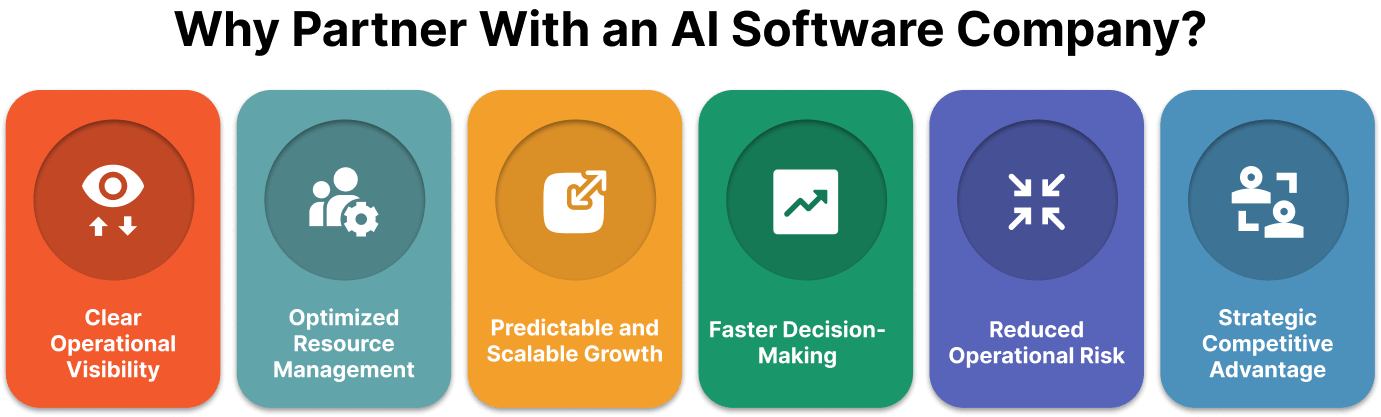
One of the biggest challenges industrial businesses face is knowing what’s happening in real time across production lines and multiple sites. BMW has brought intelligence to every corner of its network, using sensors, machines, and inspection systems that feed data into analytics platforms to spot potential issues before they affect the final vehicle.
When a deviation occurs, the system alerts the team immediately, letting them fix problems before they become costly, allowing to identify bottlenecks early and make confident, informed decisions.
Smart and strategic resource management has a direct impact on profitability when you consider all the critical assets such as time, labor, and equipment. Advanced platforms help reduce downtime, allocate staff and machinery more effectively, and track resource usage to minimize waste. This way you can maintain smooth operations and reduce costs without compromising quality or output.
More important than having a system that works alongside business is having artificial intelligence in manufacturing teams that understand industrial operations design modular, flexible platforms capable of supporting expansion across new sites, machines, or processes.
Future-ready architecture ensures that technology evolves with your venture, providing a foundation for long-term growth rather than requiring frequent overhauls or disruptive upgrades.
Delays in understanding operational performance can be costly and lead to missed opportunities. High-quality development partners create platforms that deliver real-time dashboards and automated alerts for critical events. Centralized reporting ensures that executives have all the information they need at their fingertips, allowing them to make strategic, data-driven decisions quickly and confidently.
Unexpected downtime, errors, or inefficiencies can impact both production and profitability. Systems built by capable partners include predictive maintenance features, streamlined processes, and seamless integration across multiple platforms.
Bespoke manufacturing software development company help to reduce operational risk, ensure consistent performance, and allow businesses to maintain reliable, uninterrupted operations even under complex conditions.
As if all the factors weren't good enough, the aligned technology also positions your company ahead of its competitors. With smarter systems in place, you can respond faster to market changes, leverage operational insights for strategic planning, and focus team efforts on growth initiatives rather than constantly troubleshooting day-to-day issues.
A rare and punchy combination of clarity, efficiency, and strategic foresight provides a tangible edge in a competitive industrial landscape.
Eventually, all technological advancements come down to running your operations with complete clarity and control, where problems are spotted before they become costly and every process flows smoothly. Research across industrial sectors shows predictive maintenance leads adoption at a 78% rate, followed by AI‑enabled scheduling, supply chain applications, quality control systems, and real‑time decision support, highlighting where manufacturing software companies are focusing their efforts to gain the greatest impact.
You will see real improvements in the way your teams work. Downtime drops, quality stays high, and resources get used more efficiently, giving you stronger margins and more predictable results. Specialists across all departments can focus on the big picture and put their energy into growth, innovation, and driving the business forward rather than firefighting every day.
When your systems are designed to support your goals, every decision becomes smarter, every process becomes faster, and your business is prepared to tackle challenges confidently and thrive over the long term.


Tech & Innovation Expert
Anastasiya is committed to making the complex simple. Her passion for writing, proficient research, and strong interviewing skills allow her to share in-depth insights into the ever-evolving IT landscape.

Our newsletter is packed with valuable insights, exclusive offers, and helpful resources that can help you grow your business and achieve your goals.