Construction projects generate large volumes of technical and project documentation, making it increasingly difficult for teams to quickly find, interpret, and organize the information they need. Reviewing documents manually, comparing details across files, and transferring information into internal systems can consume significant time and introduce opportunities for error.
Project teams may need to work across construction contracts, technical files, reports, schedules, and other records while maintaining consistency between different sources.
To address this challenge, we built an internal AI-powered document intelligence platform for construction workflows. The solution analyzes complex project documentation, extracts relevant information, and transforms unstructured content into structured data that teams can review and use in downstream processes. This approach brings AI document analysis into a practical workflow for working with complex project information.
By combining AI-based document understanding with deterministic business logic, the platform provides a practical and transparent approach to automating document-intensive construction workflows. It also supports AI for document processing by combining automated interpretation with predictable application-level operations.
Construction teams regularly work with complex documentation containing large amounts of technical and project-specific information. Finding a particular piece of information may require users to read through lengthy documents, cross-reference multiple files, and manually transfer relevant details into another system.
Teams may need to compare project drawings with related documentation, while using RFIs and other records to understand the context behind specific project decisions.
As document volumes grow, these processes become increasingly difficult to scale. Manual processing also makes it harder to maintain consistency and efficiently identify information that requires further review.
The client needed an internal solution that could:
This made AI document automation particularly relevant to the workflow, while keeping human review available for information that requires additional attention.
Construction teams can also encounter submittals, change orders, and other project records that need to be evaluated alongside the primary documentation, making efficient project coordination increasingly important.
We developed an internal web-based AI document intelligence platform designed around the specific needs of construction teams.
The system allows users to provide project documentation and have its contents analyzed automatically. AI interprets the unstructured material, identifies relevant information, and converts it into a structured format that can be reviewed and used by other internal processes. The resulting document data extraction process gives teams structured information without requiring them to manually transfer every relevant detail.
A key aspect of the solution is the separation between AI-powered interpretation and deterministic application logic.
AI is used where interpretation of unstructured content is required. It analyzes documents and extracts relevant information that may not follow a consistent structure.
Deterministic logic handles operations where predictable and repeatable results are important, including calculations, validation, formatting, and business rules. This hybrid approach helps balance the flexibility of AI with the reliability required for operational workflows and supports intelligent document automation without relying exclusively on generated outputs.
This separation also helps improve workflow efficiency by ensuring that automated interpretation and predictable application operations each have a clearly defined role.
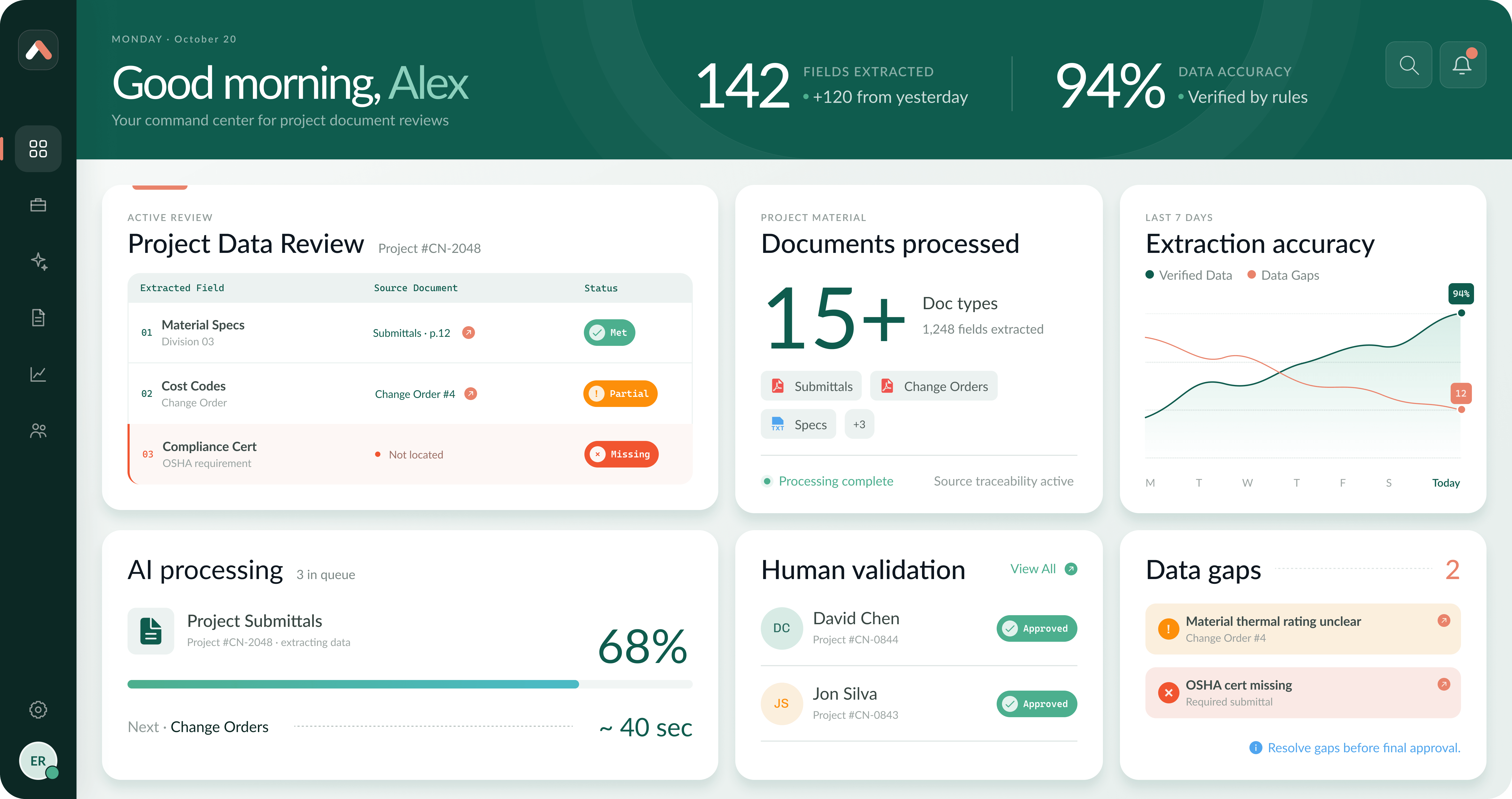
The platform combines AI-powered document understanding with structured processing and deterministic business logic to support construction teams throughout the document workflow. These capabilities help transform complex project documentation into structured, traceable information that teams can review, validate, and use in downstream processes. Together, they form a practical set of document processing tools for internal construction workflows.
The platform uses AI to interpret complex construction documentation and identify information relevant to the configured workflow, reducing the need for users to manually review every document. This supports AI document review by helping users focus attention on extracted information and items requiring additional validation.
Information identified within unstructured documents is transformed into a structured format, making it easier to review, process, and use in downstream workflows.
The extraction layer can work across both structured data and unstructured data, allowing the platform to accommodate different document formats and information patterns.
The system supports automated processing across multiple project files, helping teams work with document collections rather than treating each document as an isolated task. This provides the foundation for artificial intelligence document processing across multiple files and project workflows.
Extracted information can be traced back to its originating document. This gives users greater visibility into how information was derived and makes it easier to verify results.
The system can also preserve relevant metadata so that extracted information remains connected to its document context and can become more easily searchable information for downstream users.
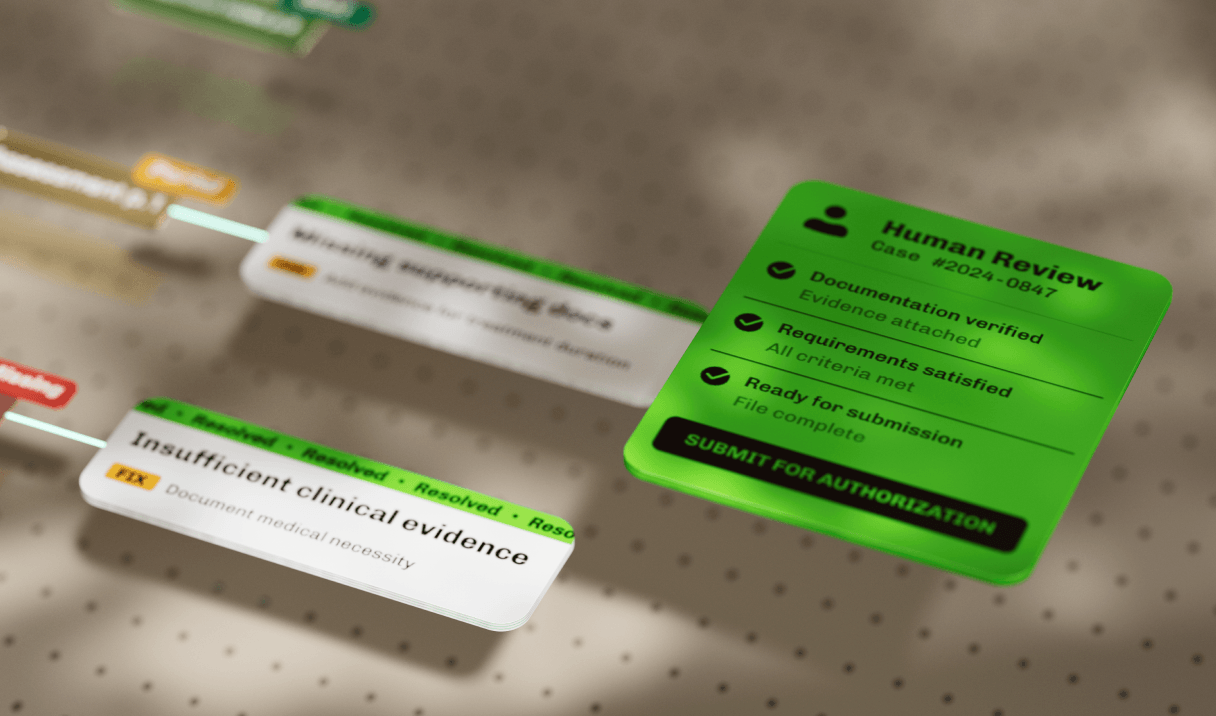
The platform provides confidence and validation information to help users identify extracted items that may require additional attention or human review. This also supports more controlled data extraction ai workflows where automated results need to remain transparent and reviewable.
Calculations, validation rules, formatting, and other predictable operations are handled through application logic rather than relying exclusively on AI-generated results.
The platform was designed as a reusable foundation rather than a solution limited to one document type. Its modular structure makes it possible to introduce additional document types, extraction requirements, and construction workflows over time. This creates a flexible document processing platform that can evolve with changing internal requirements.
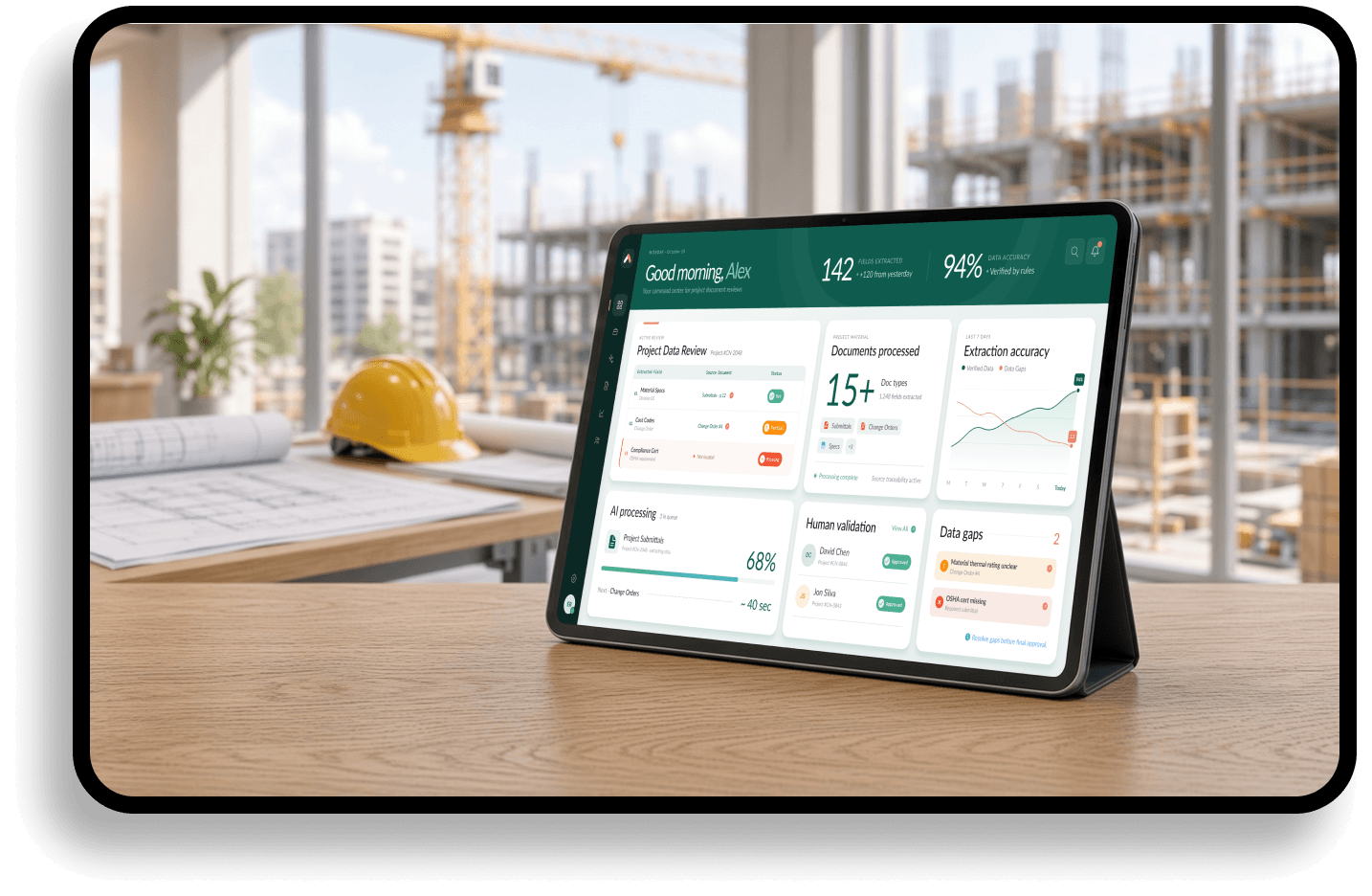
A dedicated web interface provides construction teams with a centralized environment for submitting documents, reviewing extracted information, and working with structured results. The application can serve as an AI document management system for organizing document-driven workflows within the internal environment.
The platform was designed around a modular processing workflow that separates document interpretation from application-level processing.
When project documentation is submitted, the system processes the source material and passes relevant content through the AI document-understanding layer. The AI analyzes the unstructured information and produces structured outputs according to the requirements of the workflow. This approach supports artificial intelligence document management by connecting document interpretation with structured internal processing.
The platform can accommodate traditional invoices, supporting documentation, and other records that contribute to the overall project information set.
These outputs are then handled by deterministic application logic responsible for validation, calculations, formatting, and other business rules. The resulting information is presented to users together with supporting source and confidence information, enabling human review where necessary.
This architecture creates a clear division of responsibilities: AI handles interpretation, while application logic provides consistency and control.
The modular design also allows the platform to evolve without rebuilding the entire solution whenever a new document type or workflow is introduced. This makes it suitable for broader AI document management requirements as additional workflows are introduced.
The approach can reduce information silos by making information extracted from different project sources available through a more consistent internal workflow.

The platform turned a document-heavy construction workflow into a structured AI-assisted process, reducing repetitive manual work and giving teams a more reliable way to review extracted information.
The resulting workflow can also incorporate inspection reports, site reports, and other project records without requiring teams to manage every source as a completely separate information process.
The result is a practical AI document intelligence platform that combines 15+ document types, 100+ structured data fields, and a 3-stage processing workflow to make complex construction documentation easier to analyze, validate, and use.
Rather than relying on AI alone, the solution combines AI-based interpretation with deterministic calculations, validation, formatting, and source traceability. This gives construction teams the efficiency of automated document processing while retaining the transparency and human oversight required for working with project information. The approach can also support broader AI documentation tools as the platform expands to additional internal workflows.
The resulting information can support better decision-making by giving teams a clearer basis for evaluating project documentation and extracted data.
AI document intelligence can help construction organizations address one of the industry's persistent operational challenges: turning large volumes of complex documentation into information that teams can actually use.
This project demonstrates a practical approach to applying AI in construction. Rather than relying on AI for every part of the workflow, the platform combines AI-powered interpretation with deterministic business logic, source traceability, and human validation. It is focused on practical workflow improvement rather than positioning the platform as a generic AI doc generator.
The result is a scalable internal foundation that can evolve alongside the organization's document-processing needs. As additional document types and workflows are introduced, the same architecture can be extended to support broader construction operations and further reduce manual information processing. This provides a foundation for AI-ready document digitization as document workflows continue to become more structured.
The architecture can also help maintain compliance records alongside extracted project information, supporting a more consistent approach to documentation as workflows expand.
At CleverDev Software, we build practical AI solutions that integrate intelligent automation with reliable application logic. Our team can help transform document-heavy business processes into structured, transparent, and scalable digital workflows using AI documentation where it delivers practical value.
Whether you need AI document intelligence for construction or an internal platform for another document-intensive process, we can help design and develop a solution around your specific workflows and business requirements. The focus is on building the best AI document processing approach for the actual workflow rather than applying AI where it does not provide meaningful value.
The platform can also help organize project correspondence and related records within connected document repositories, giving teams a more consistent environment for managing project information.