What ROI are organizations actually achieving from AI agents? This report consolidates enterprise case studies, benchmark data, and research findings to reveal where agentic AI delivers measurable business impact, how quickly value is realized, and which deployment strategies consistently outperform others.
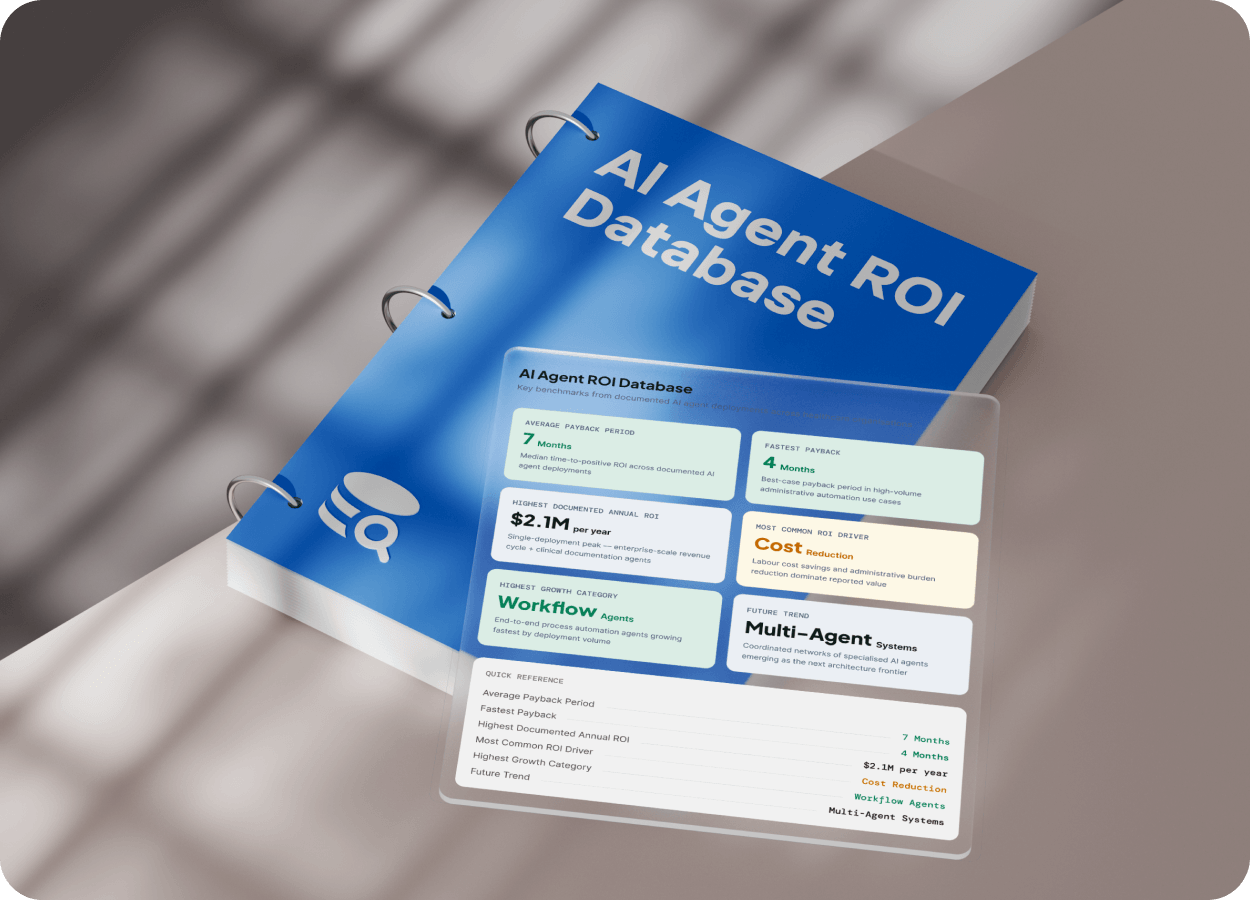
Artificial intelligence is entering a new phase of enterprise adoption. While early generations of AI focused primarily on prediction, content generation, and decision support, a rapidly growing category of systems now performs actions, coordinates workflows, and executes multi-step business processes. These systems which are commonly described as AI agents or agentic AI systems are transforming how organizations create value, automate operations, and allocate human labor.
As AI agents move from experimentation to production deployment, executive attention is shifting away from technical capability and toward measurable business outcomes. Organizations increasingly require evidence that agentic systems generate operational improvements, cost savings, revenue growth, service enhancements, or strategic advantages that justify ongoing investment. This shift has elevated return on investment (ROI) from a secondary consideration to a primary decision criterion.
The challenge facing many organizations is that AI agent ROI remains difficult to compare across industries, use cases, and levels of autonomy. Published case studies frequently emphasize successful deployments but use inconsistent methodologies, metrics, and baselines. Vendor-reported outcomes often highlight isolated productivity gains while excluding integration costs, governance requirements, and long-term operational realities.
The AI Agent ROI Database was created to address this gap. The database provides a structured framework for evaluating agentic AI investments across industries and deployment types. Rather than treating all AI agents as a single category, the database classifies systems according to function, autonomy level, workflow integration, and measurable business outcomes. This approach enables organizations to benchmark investments, compare implementation strategies, identify recurring success factors, and evaluate expected value realization timelines.
First, AI agent ROI is increasingly determined by workflow design rather than model sophistication. High-performing deployments are concentrated in clearly defined, high-frequency workflows with measurable business outcomes.
Second, positive ROI is typically achieved faster than many enterprise leaders expect when deployments are narrowly scoped and deeply integrated into existing workflows. Across documented enterprise deployments, average time-to-positive ROI is approximately seven months, though outcomes vary significantly based on implementation complexity and organizational readiness.
Third, successful deployments generate value through multiple mechanisms simultaneously. Cost reduction remains the most frequently reported benefit, but many of the strongest implementations combine efficiency gains, capacity expansion, service quality improvements, and revenue growth.
Fourth, governance maturity, data quality, observability, and change management consistently emerge as stronger predictors of realized ROI than model selection alone.
Fifth, organizations are gradually transitioning from assistive AI systems toward workflow-executing agents and multi-agent architectures. As autonomy increases, ROI measurement must evolve beyond task-level productivity metrics toward workflow-level and organizational-level outcomes.
The findings presented throughout this report suggest that AI agents should be evaluated not as software features, but as operational infrastructure capable of reshaping how organizations execute work. Organizations that develop disciplined approaches to ROI measurement, governance, and deployment sequencing will be better positioned to capture value from agentic AI while avoiding many of the risks associated with premature scaling and unrealistic performance expectations.
This report presents the methodology, benchmarks, industry analyses, success factors, risk considerations, and future outlook necessary for informed AI agent investment decisions.
The conversation surrounding artificial intelligence has undergone a significant transformation. During the first wave of enterprise AI adoption, organizations focused primarily on experimentation, proof-of-concept development, and technological exploration. Success was often measured through innovation signaling, internal learning, or demonstration of technical feasibility.
Today, that environment has changed. As organizations deploy AI into operational workflows, stakeholders increasingly expect measurable business outcomes. Executive teams, investors, boards, regulators, and operating leaders are asking a fundamentally different question:
What value does this system create relative to its cost?
This shift reflects the broader maturation of enterprise AI adoption. The question is no longer whether AI can perform a task. The question is whether AI can perform that task in a manner that generates sustainable economic value while maintaining acceptable levels of risk, governance, and operational reliability.
As a result, return on investment has emerged as one of the most important metrics in AI decision-making. Organizations increasingly evaluate AI initiatives using the same criteria applied to other capital investments, operational transformation programs, and technology modernization efforts. Investment decisions now depend on evidence of productivity improvements, workflow acceleration, service enhancements, quality improvements, cost reduction, revenue generation, and strategic capability expansion.
The emergence of agentic AI has accelerated this trend. Unlike traditional software systems, AI agents do not simply support human decision-making. They increasingly execute workflows, coordinate actions across systems, retrieve information, communicate with users, and perform operational tasks with varying levels of autonomy.
This changes the economics of enterprise technology. Rather than measuring isolated productivity gains, organizations must evaluate how agentic systems influence entire workflows, departments, and business processes.
Consequently, ROI has become more than a financial metric. It is increasingly functioning as a strategic KPI that determines whether AI initiatives scale, receive continued investment, and become integrated into core business operations.
The rise of AI agent ROI reflects a broader transition from experimentation to accountability, from innovation signaling to measurable value realization, and from technological capability to operational performance.
As organizations evaluate the return on investment of AI systems, precise terminology becomes increasingly important. The term "AI agent" is frequently used across industry discussions, vendor marketing materials, academic research, and enterprise transformation initiatives. However, significant differences exist between AI assistants, chatbots, workflow automation systems, and autonomous agents.
These distinctions matter because each category generates value differently, incurs different costs, requires different governance structures, and exhibits different ROI profiles.
At the most basic level are AI assistants and copilots. Copilots are designed to augment human performance rather than replace it. They assist users by generating recommendations, drafting content, summarizing information, answering questions, or providing contextual guidance. Humans remain responsible for interpretation, decision-making, and execution.
Typical ROI drivers for copilots include:
Chatbots represent a more specialized category. Traditional chatbots focus on conversational interaction, customer support, information retrieval, and workflow navigation. Their primary value lies in service efficiency and accessibility rather than operational execution.
Modern large language model-powered chatbots have significantly expanded these capabilities, but most remain limited to communication and information exchange rather than direct workflow execution.
Workflow agents extend beyond conversation. These systems perform actions within defined business processes. Workflow agents can retrieve information, interact with enterprise software, trigger actions, coordinate tasks, update records, generate outputs, and execute portions of operational workflows. Rather than simply answering questions, workflow agents complete work. Examples include:
At the highest end of the autonomy spectrum are autonomous agents. Autonomous agents possess the ability to:
In these systems, human involvement shifts from execution toward supervision, governance, monitoring, and exception handling. Recent academic research highlights that the evolution toward increasingly autonomous systems is one of the defining trends in agentic AI development.
This progression can be understood as a continuum.
Copilot → Chatbot → Workflow Agent → Autonomous Agent
As organizations move along this continuum, both potential value and implementation complexity increase. Likewise, governance requirements, measurement requirements, accountability expectations, and risk exposure increase.
For decision makers, these distinctions are essential because comparing ROI across deployments requires understanding not only what technology was implemented, but also how much responsibility the system assumes within operational workflows.
A productivity copilot and an autonomous workflow orchestrator may both be described as AI agents, yet they generate fundamentally different economic outcomes.
The AI Agent ROI Database therefore classifies systems according to function, autonomy level, workflow responsibility, and organizational impact to ensure meaningful benchmarking across deployments.
The rapid acceleration of agentic AI has created a growing gap between technological capability and decision-grade understanding of value creation.
Across industry commentary, deployment case studies, practitioner reports, and academic research, organizations increasingly demonstrate the ability to deploy sophisticated AI systems. However, consistent methods for evaluating their economic impact remain limited. This creates a significant challenge for executives, investors, operational leaders, healthcare systems, public sector organizations, and enterprise technology teams.
Organizations face difficult questions:
Existing information sources rarely provide consistent answers.
Vendor case studies often focus on successful outcomes without standardized methodologies. Academic research frequently evaluates technical performance without measuring business value. Industry commentary often discusses future potential without providing operational evidence.
The AI Agent ROI Database was created to address these challenges. Its purpose is to provide a structured decision-support framework that connects agent capabilities to measurable business outcomes. The database serves five primary objectives.
Organizations require consistent benchmarks across industries, workflows, and deployment models. Without standardization, ROI claims remain isolated and difficult to evaluate. The database normalizes evidence to enable meaningful comparison across deployments.
Many organizations struggle to distinguish between perceived productivity gains and realized business outcomes. The database links capabilities to measurable indicators including:
Agentic AI is evolving rapidly. Research indicates a progression from assistive systems toward increasingly autonomous, multi-agent architectures. The database enables organizations to position deployments along a maturity continuum and compare investments based on capability evolution.
Successful AI investments require understanding both opportunity and risk. The database incorporates evaluation criteria including:
This allows organizations to interpret ROI claims with appropriate context.
The ultimate purpose of the database is to improve capital allocation decisions. Organizations must determine:
By converting fragmented evidence into a structured analytical framework, the database enables more disciplined AI investment decisions.
The AI Agent ROI Database is therefore not simply a catalog of technologies. It is an economic intelligence layer designed to connect technical capability, operational performance, and business value within the rapidly evolving ecosystem of agentic AI.
The quality of any ROI database depends on the quality of its underlying evidence. AI agent deployments present a particularly challenging evaluation environment because definitions, methodologies, and reporting standards vary substantially across organizations. To ensure analytical consistency, the AI Agent ROI Database applies structured source selection criteria. Sources were evaluated according to five primary dimensions.
Priority was given to deployments operating within real business environments rather than theoretical concepts or laboratory demonstrations. Included sources typically contained:
Excluded sources typically consisted of:
Sources were prioritized when they included measurable performance indicators such as:
Where direct ROI calculations were unavailable, proxy indicators were retained and categorized separately.
Sources needed sufficient detail to determine:
This enables normalization across deployments.
Higher weighting was assigned to sources that clearly described:
Transparent methodologies improve comparability and reduce interpretation risk.
Given the rapid pace of agentic AI evolution, priority was assigned to recent materials reflecting contemporary architectures and deployment practices.
Measuring AI agent ROI requires a framework capable of capturing both direct and indirect value creation. Traditional software ROI models often assume deterministic workflows and predictable outputs. AI agents operate differently. They interact across systems, coordinate actions, execute workflows, and generate outcomes that evolve over time. As a result, ROI is evaluated using a three-layer framework.
Investment inputs include:
These inputs define total deployment cost.
Operational impact measures workflow-level changes including:
These indicators capture process-level performance changes.
Business outcomes represent realized value.
Examples include:
Unlike productivity proxies, business outcomes capture economic impact. The database distinguishes between intermediate operational improvements and realized financial value. This distinction is critical because not all efficiency gains translate into ROI. For example, a workflow that saves employee time only generates ROI if that time is redeployed toward productive activities or labor requirements change accordingly. The methodology therefore emphasizes attribution, comparability, and transparency across deployment environments.
One of the primary challenges in evaluating AI agent ROI is the inconsistency of reporting practices across organizations. Case studies frequently use different terminology, different baselines, different success metrics, and different implementation contexts. A deployment described as a chatbot in one organization may function operationally as a workflow agent in another. Similarly, productivity gains reported in one case may represent labor savings, while similar gains elsewhere may simply indicate increased throughput.
Without normalization, meaningful comparison becomes impossible. To address this challenge, the AI Agent ROI Database applies a structured normalization framework that converts heterogeneous case studies into a standardized analytical format. Normalization occurs across five dimensions.
Each deployment is categorized according to its primary operating model:
This classification enables comparison between systems with similar levels of autonomy and workflow responsibility.
Deployments are assigned to primary operational environments including:
This ensures that ROI comparisons account for workflow characteristics.
Each case study is evaluated relative to pre-deployment performance.
Where available, normalization captures:
Baseline normalization improves attribution and reduces inflationary bias.
Reported outcomes are standardized into common value categories:
Cost Reduction
Examples include:
Capacity Expansion
Examples include:
Quality Improvement
Examples include:
Revenue Enhancement
Examples include:
Case studies are also categorized according to maturity stage:
This distinction is important because pilot environments frequently overstate performance relative to long-term production environments. Through this normalization framework, individual case studies become comparable analytical observations rather than isolated narratives. The result is a database capable of supporting meaningful benchmarking across industries, use cases, and deployment strategies.
Despite rapid growth in AI agent adoption, the available evidence base remains uneven. The AI Agent ROI Database therefore incorporates explicit data quality assessment mechanisms designed to prevent overinterpretation of incomplete or unreliable evidence. Several limitations consistently appear across available sources.
Many reported outcomes occur within broader transformation initiatives. Organizations frequently redesign workflows, modify staffing structures, introduce new technologies, and implement process changes simultaneously with AI deployment. This creates attribution ambiguity. Observed performance improvements may result from:
or some combination thereof.
The database therefore evaluates attribution confidence separately from reported outcomes.
Organizations use widely varying metrics. Examples include:
Because measurement approaches differ substantially, direct comparison often requires interpretation and normalization.
Published case studies disproportionately emphasize successful deployments. Organizations rarely publish:
This creates systematic upward bias in available evidence. The database explicitly recognizes survivorship bias as a core limitation.
Many publicly available case studies originate from vendors, consultants, or implementation partners. Although these sources often provide valuable operational insights, they may emphasize positive outcomes while underreporting challenges, limitations, or hidden costs.
AI agent performance frequently changes over time. Early deployments may exhibit:
or alternatively:
Static measurements may therefore misrepresent long-term outcomes.
To improve interpretability, each deployment receives evaluation across three dimensions:
Attribution Clarity
How clearly are outcomes linked to agent activity?
Measurement Consistency
How reliable and comparable are reported metrics?
Evidence Robustness
What level of validation supports reported outcomes?
Evidence categories include:
These scoring mechanisms help ensure that database findings are interpreted with appropriate levels of confidence. Ultimately, one of the central purposes of the AI Agent ROI Database is not merely to present ROI estimates, but also to surface uncertainty and improve decision quality under imperfect information conditions.
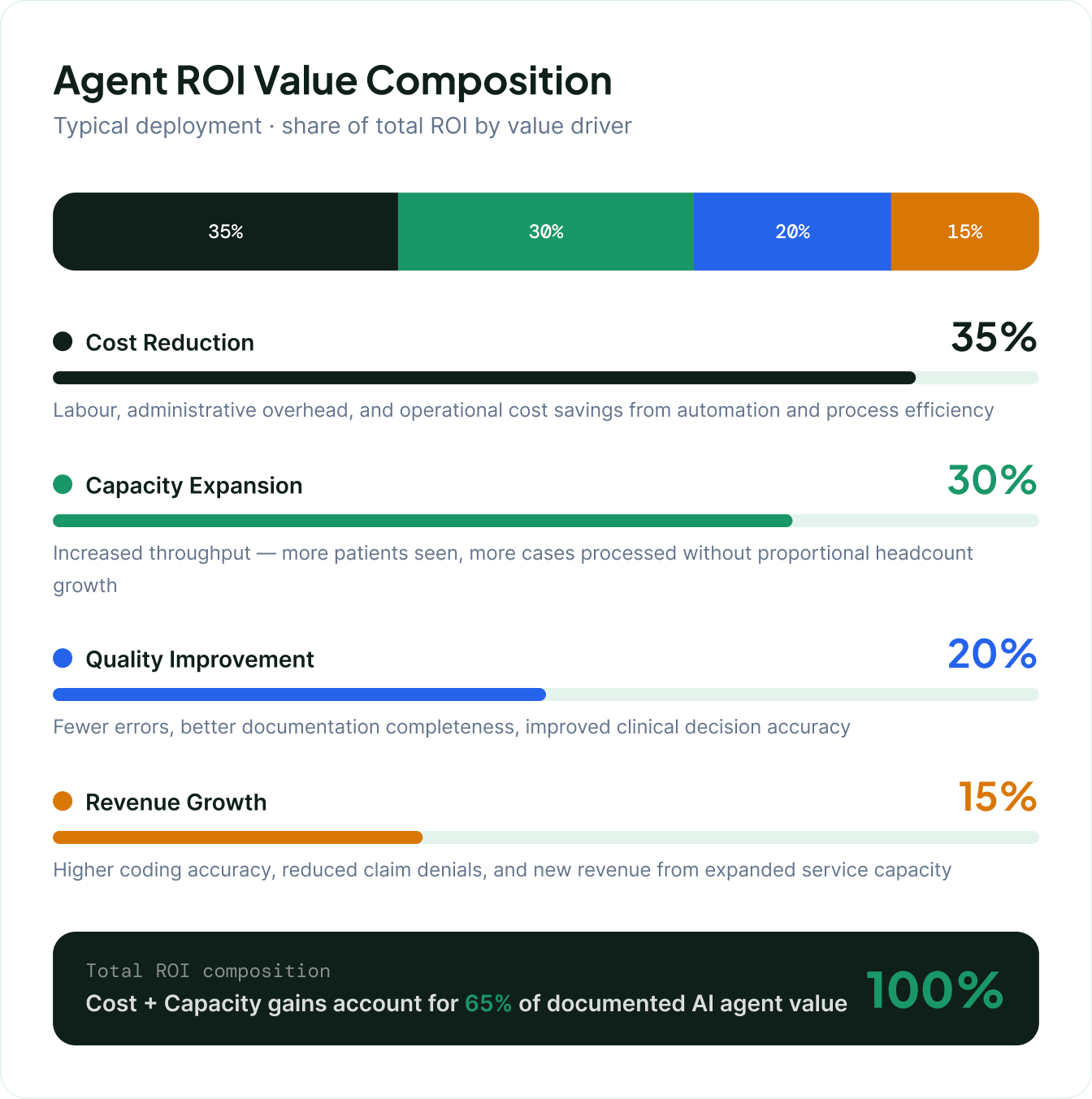
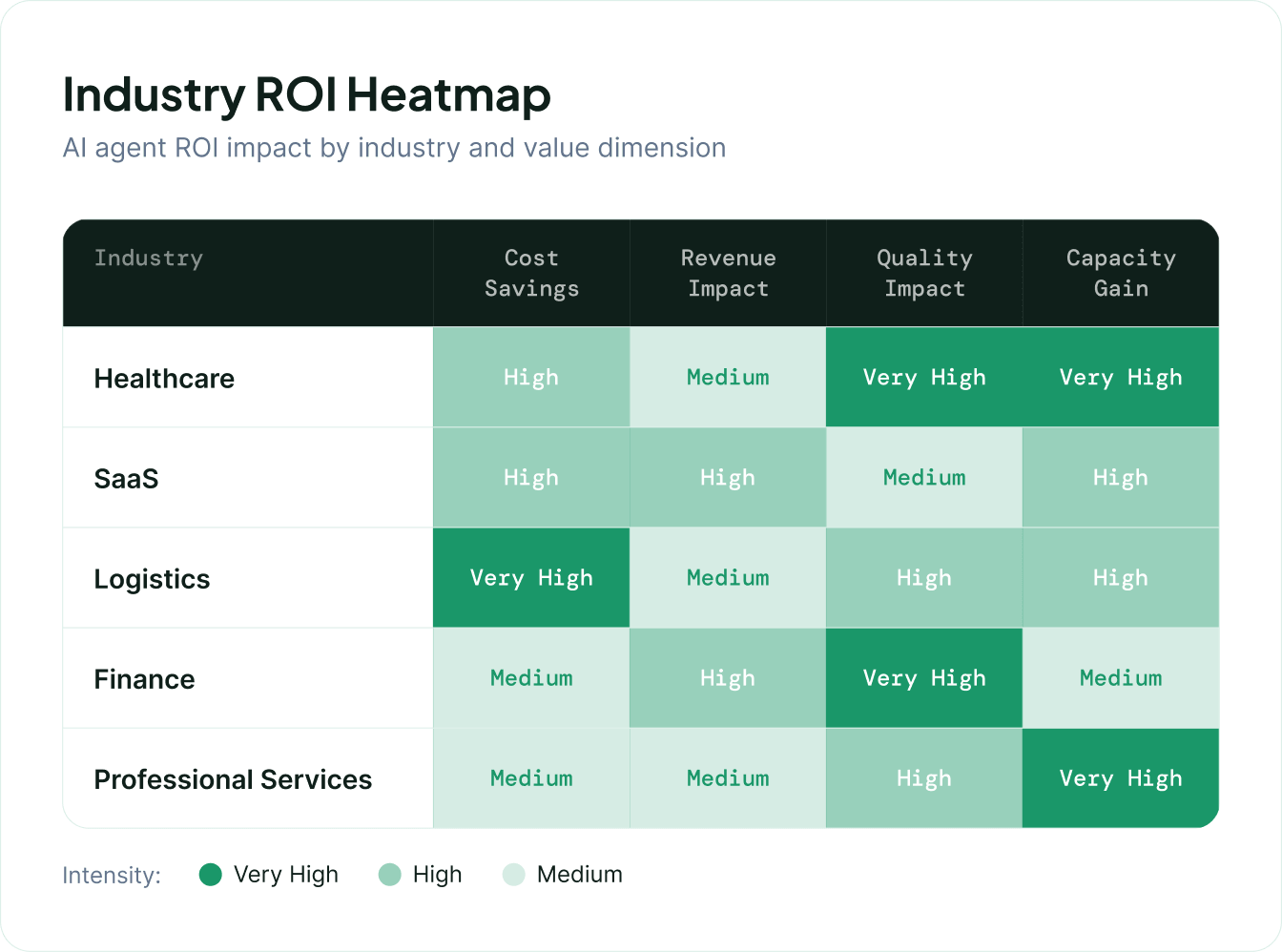
The economic value generated by AI agents is multidimensional. Unlike traditional automation initiatives that frequently focus on labor savings alone, AI agents often create value through multiple interacting mechanisms. Analysis of deployments across SaaS, healthcare, financial services, logistics, retail, and professional services environments reveals four recurring value streams.
Cost reduction remains the most widely reported source of ROI. Common mechanisms include:
Cost reduction is typically the easiest ROI component to quantify because it maps directly to operational expenditures. However, cost reduction alone rarely captures the full economic impact of AI agents.
Many organizations deploy agents not to eliminate labor but to increase output. Examples include:
Capacity expansion often creates significant economic value without reducing headcount.
This is particularly common in healthcare, consulting, financial services, and customer success environments.
Revenue-related ROI frequently emerges through:
While more difficult to attribute directly, revenue generation can become one of the most valuable long-term benefits. Several deployments documented by: Technova Partners and Bottis demonstrate meaningful commercial impact resulting from agent-assisted customer engagement and sales operations.
Quality improvements are often overlooked because they do not always produce immediate financial effects. However, improved quality can significantly influence long-term ROI through:
Quality improvements frequently reinforce other ROI components.
For example:
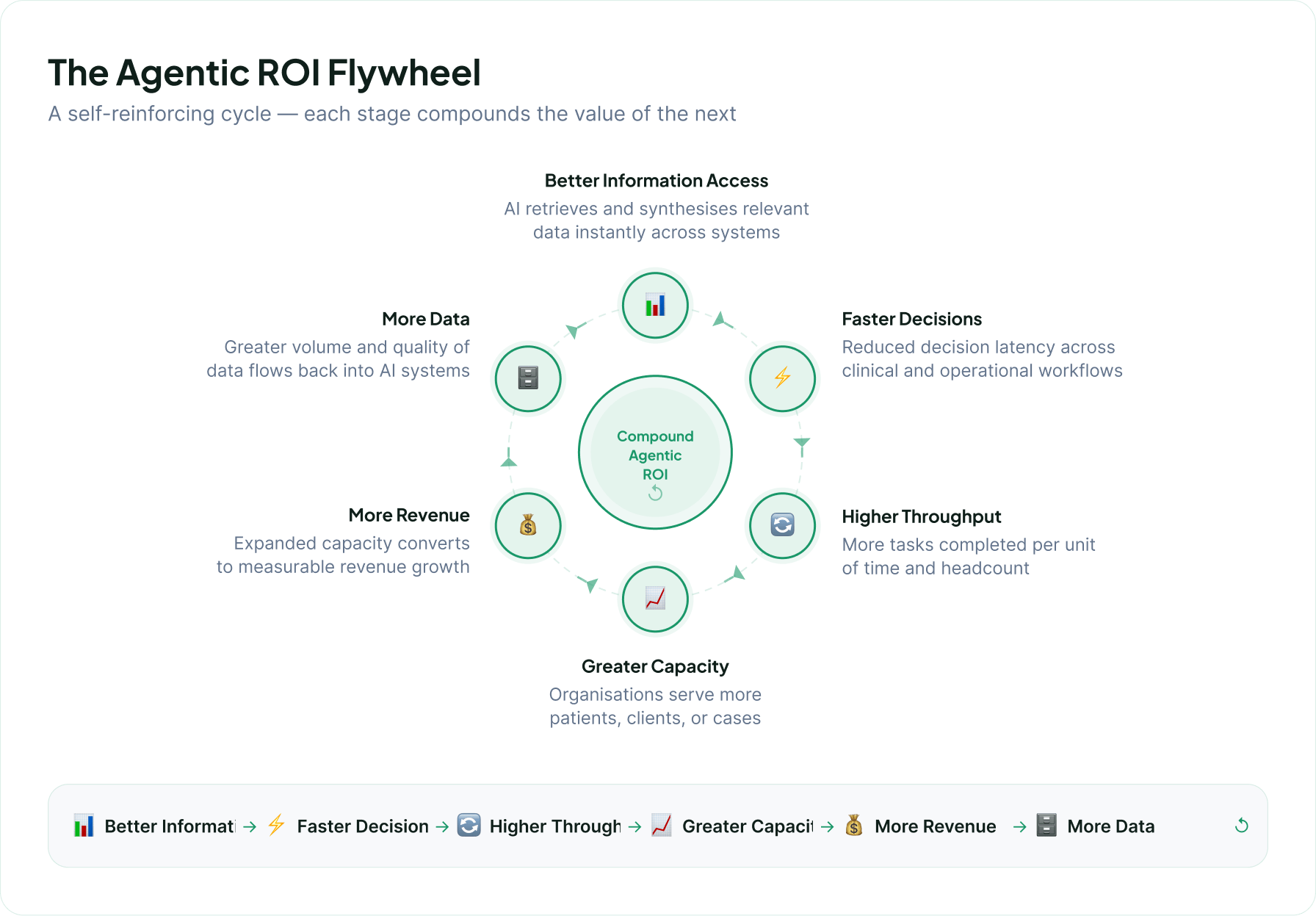
Improved quality → Less rework → Lower costs → Higher capacity
As a result, AI agent ROI should be understood as a portfolio of value streams rather than a single financial metric.
For most executives, the practical question is not whether AI agents create value. The practical question is:
How quickly will value exceed investment costs?
This is the purpose of payback period analysis.
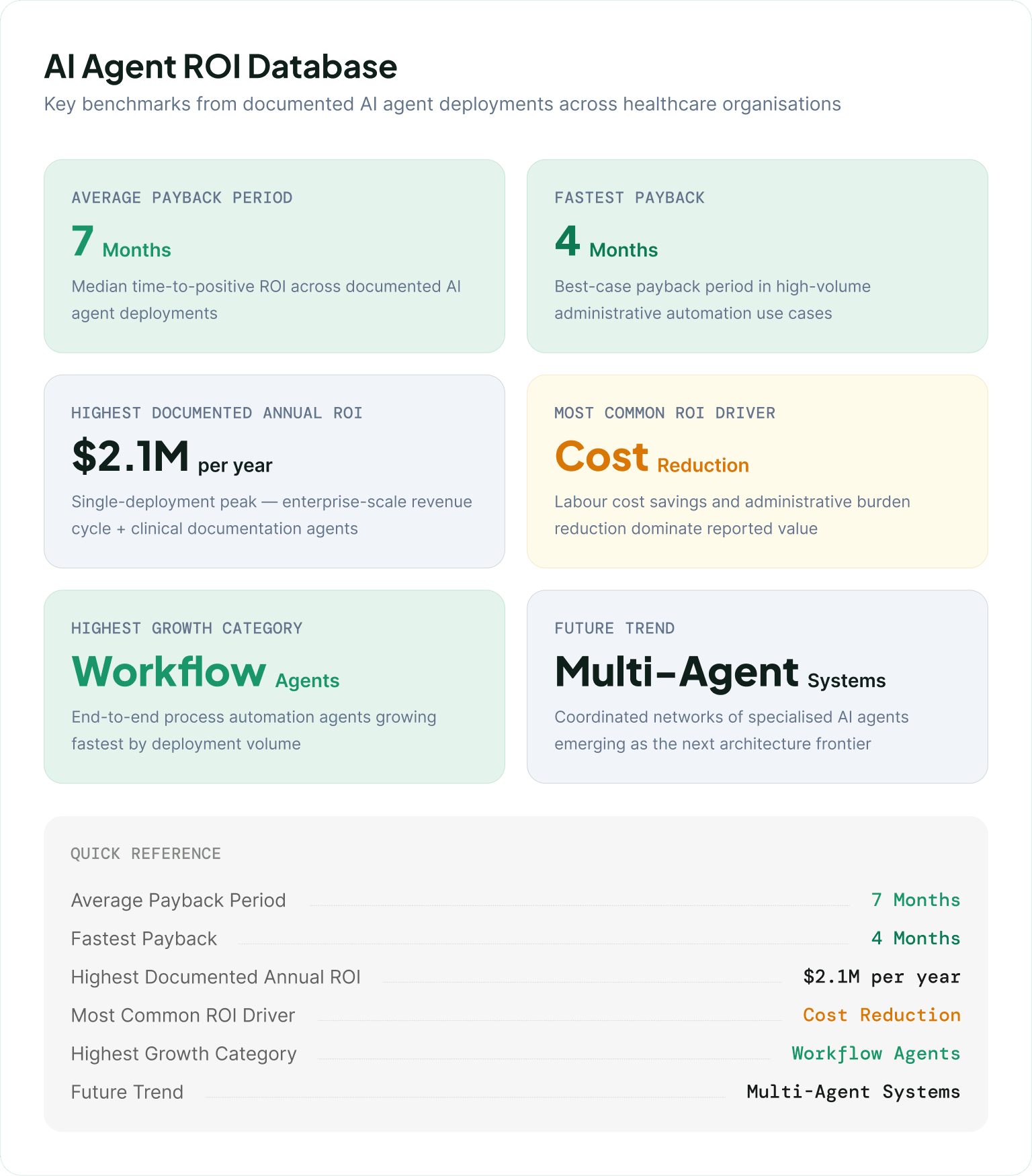
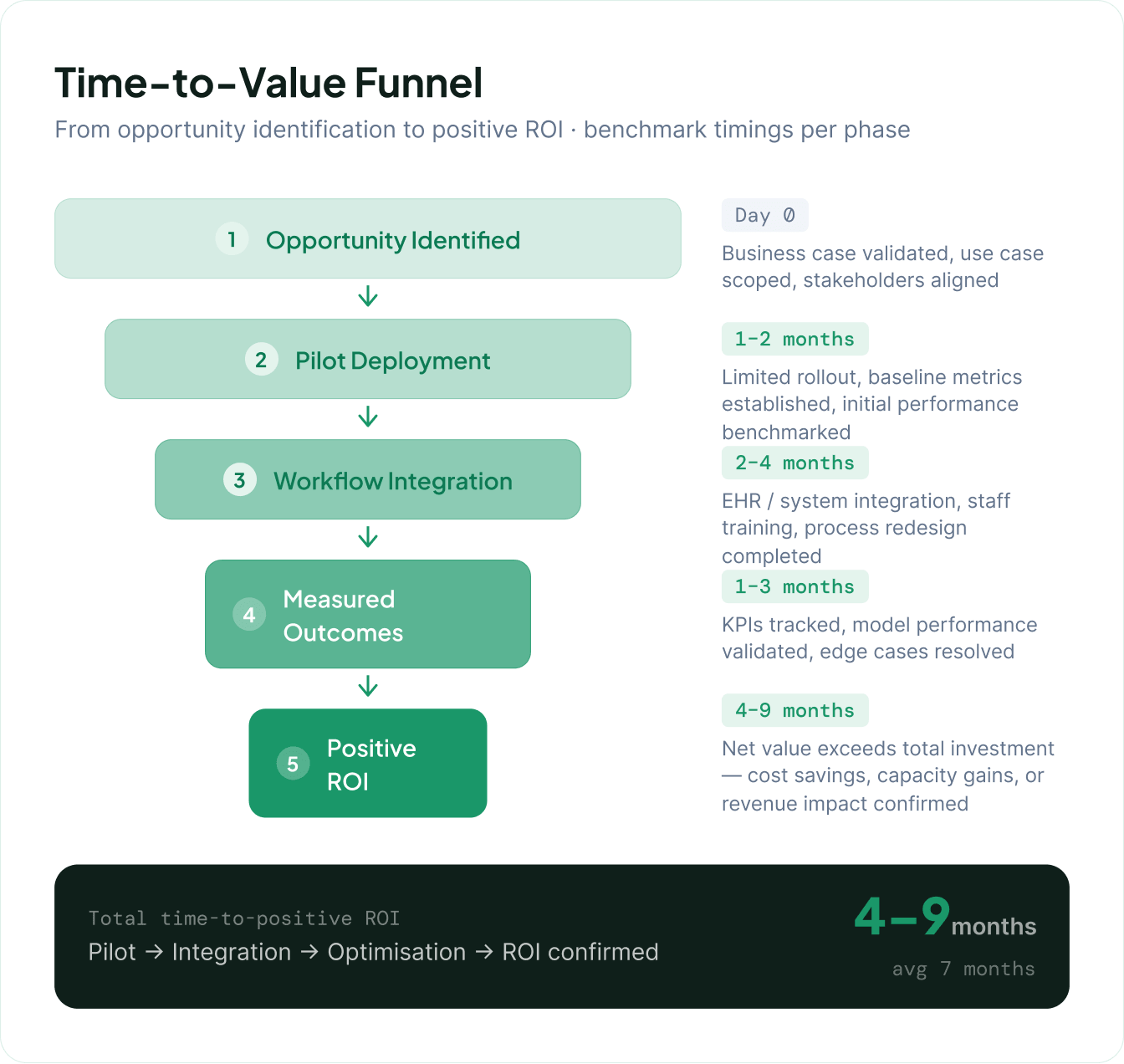
Payback period represents the time required for cumulative benefits to offset deployment costs. Across documented enterprise deployments reviewed by CTO Accelerator the average time-to-positive ROI was approximately seven months.Reported deployments ranged from roughly four months to nine months depending on workflow complexity and implementation scope. Several patterns emerge.
The shortest payback periods are typically associated with:
These environments exhibit:
Longer timelines are commonly associated with:
These implementations require:
Although slower to realize, they frequently generate larger long-term returns.
Investment thresholds vary according to:
Organizations focused on rapid value realization often prioritize narrow workflow deployments. Organizations pursuing broader transformation may accept longer payback periods in exchange for larger long-term gains. The evidence suggests that successful organizations align deployment strategy with expected value realization timelines rather than applying a single ROI threshold across all use cases.
AI agents are frequently compared to traditional automation technologies. While there are similarities, important differences exist. Traditional automation systems generally operate according to predefined rules.
They excel in:
Their ROI is primarily generated through:
Traditional automation systems are highly effective when processes are predictable and exceptions are rare. AI agents operate differently. They function within environments characterized by:
As a result, AI agent ROI extends beyond simple labor substitution. Additional value mechanisms include:
Agents can synthesize information across multiple systems and sources, reducing cognitive workload while improving decision quality.
Agents increasingly coordinate multiple tasks, systems, and participants within a single operational flow.
Traditional automation struggles when workflows contain numerous exceptions. AI agents are capable of handling greater variability, allowing organizations to automate broader classes of work.
Unlike static automation systems, agent performance may improve through:
This creates a more dynamic ROI profile.
However, AI agents also introduce new costs.
These include:
Therefore, AI agent ROI should not be viewed as a replacement for traditional automation ROI. Rather, the two approaches are complementary.
The strongest enterprise outcomes frequently combine deterministic automation for structured tasks with AI agents for adaptive and information-intensive activities.
As organizations move toward increasingly autonomous systems, traditional ROI frameworks become less effective. A new concept is emerging:
Agentic ROI
Agentic ROI reflects value created through the autonomous coordination of work rather than the execution of isolated tasks.
Traditional ROI models often assume:
Input → Task → Output
Agentic systems increasingly operate according to:
Goal → Planning → Coordination → Execution → Adaptation → Outcome
This creates new value dimensions.
Agents increasingly coordinate multiple systems and activities. Value emerges from reducing friction across workflows rather than improving individual tasks.
As human intervention decreases, organizations can redirect labor toward higher-value activities.
Agentic systems can respond dynamically to changing circumstances. This reduces operational rigidity and improves responsiveness.
Agentic systems frequently scale across a broader range of activities than traditional automation. This enables organizations to increase output without proportional increases in staffing.
One of the defining characteristics of Agentic ROI is cumulative impact. A single productivity improvement may create limited value.
However, when agents improve:
simultaneously, benefits compound across operations.
Research increasingly suggests that future ROI frameworks will focus less on individual task automation and more on system-level outcomes. This transition represents one of the most important developments in enterprise AI economics.
The AI Agent ROI Database consolidates documented deployments across enterprise, healthcare, financial services, logistics, retail, professional services, and knowledge-intensive environments.
The current evidence base includes operational data, implementation analyses, deployment case studies, and research findings alongside supporting industry analysis and academic research. Across the database, several quantitative signals emerge.
Among documented enterprise deployments reviewed by CTO Accelerator:
These outcomes should be interpreted as directional benchmarks rather than universal standards. Implementation quality, workflow complexity, governance maturity, and organizational readiness all significantly influence realized outcomes.
Across documented cases, value creation clusters around four recurring dimensions:
Cost reduction remains the most consistently reported outcome. However, high-performing deployments increasingly generate multiple forms of value simultaneously.
The database includes deployments spanning:
This diversity allows comparison across both industry and workflow dimensions.
Most documented deployments fall into three primary categories:
Fully autonomous enterprise deployments remain relatively uncommon. Research suggests that most organizations continue to favor bounded autonomy models where human oversight remains integrated into workflow execution.
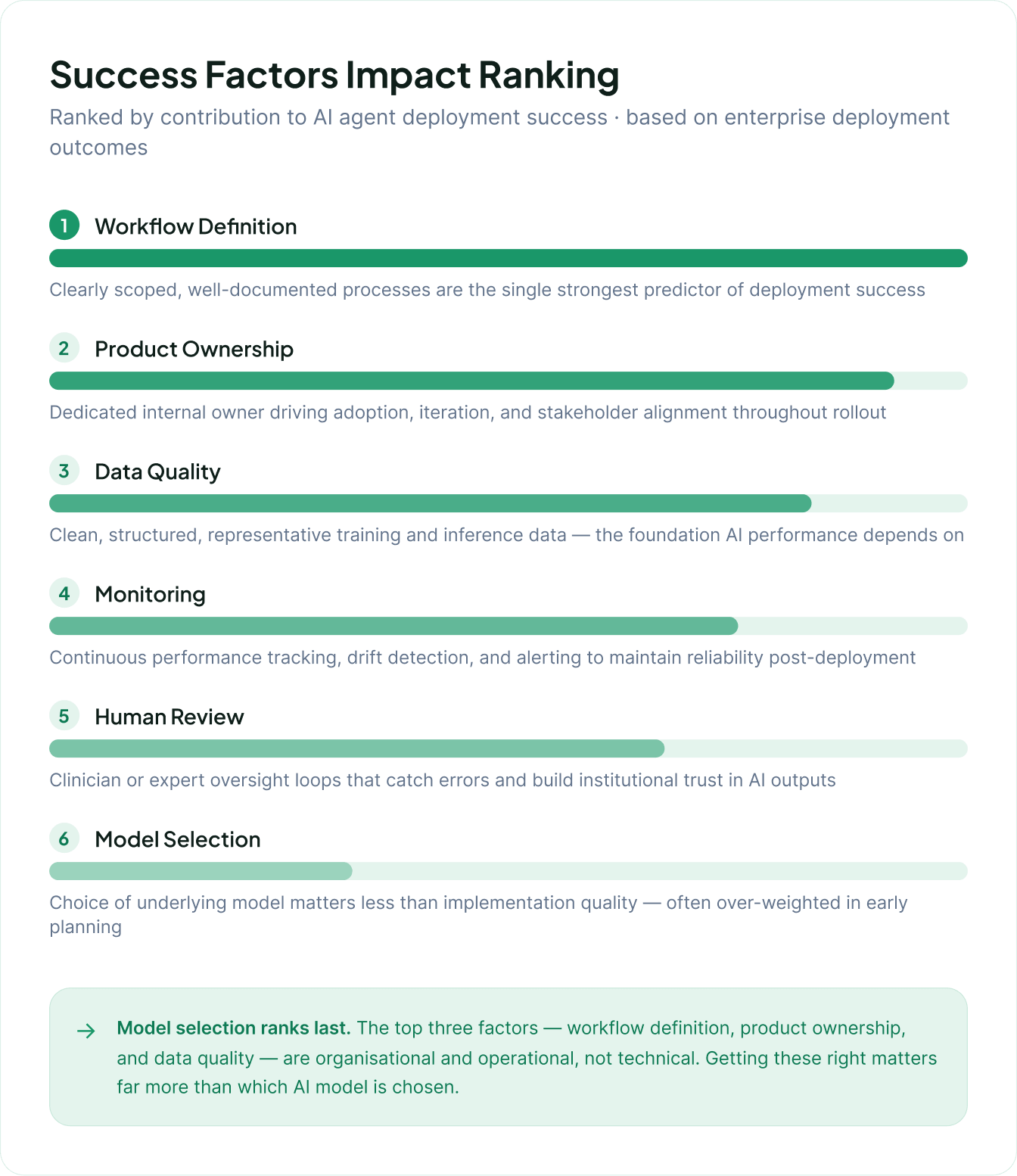
Perhaps the most important finding is that implementation quality appears to have greater influence on realized ROI than model sophistication.
Organizations with:
consistently outperform organizations relying primarily on technological capability.
Analysis of the AI Agent ROI Database indicates that value creation is distributed across multiple economic dimensions. Contrary to common assumptions, AI agent ROI is rarely driven by labor savings alone. Instead, successful deployments frequently generate blended outcomes.
Efficiency-led deployments focus on:
Examples include:
Efficiency-driven deployments frequently produce the fastest payback periods because benefits are easily measurable.
Capacity-led deployments emphasize:
These deployments often create substantial value without reducing staffing levels. Healthcare environments provide particularly strong examples. Scheduling systems, patient communication agents, and knowledge retrieval tools frequently enable staff to support more patients without proportional increases in administrative burden.
Quality improvements often emerge through:
Although these benefits are sometimes difficult to monetize immediately, they frequently generate significant long-term value.
Revenue-focused deployments are common within:
Documented examples include:
The real-life cases demonstrate measurable commercial benefits linked directly to AI agent deployment.
The highest-performing deployments rarely depend on a single value stream.
Instead, they generate:
Efficiency Gains → Capacity Expansion → Quality Improvement → Revenue Growth
These reinforcing effects create compound ROI profiles that exceed the value of isolated automation initiatives. This finding reinforces one of the central conclusions of the database:
AI agent ROI should be evaluated as a system-level phenomenon rather than a task-level outcome.
Time-to-value has emerged as one of the most important evaluation criteria for AI agent investments. Organizations increasingly prioritize deployments capable of producing measurable outcomes within predictable timeframes. Database analysis reveals several recurring patterns.
The shortest implementation-to-value timelines are generally observed within:
Common characteristics include:
These deployments often begin generating measurable value within several months of production launch.
Intermediate timelines are typically associated with:
These environments require greater integration depth and organizational adaptation. However, they frequently produce larger long-term gains.
The longest time-to-value profiles occur within:
Although payback periods may be longer, these deployments frequently create transformational organizational capabilities.
Across the database, five variables consistently influence realization speed:
Organizations that optimize these dimensions consistently achieve faster returns. Importantly, the database suggests that time-to-value is primarily an implementation outcome rather than a technology outcome. The same underlying model may generate dramatically different ROI timelines depending on deployment strategy.
The purpose of these benchmark tables is not to establish universal performance expectations, but to provide directional reference points derived from documented enterprise deployments. Actual outcomes depend on workflow design, organizational readiness, governance maturity, integration complexity, data quality, and implementation discipline. Nevertheless, the benchmarks provide useful context for evaluating expected performance ranges and identifying high-potential deployment categories.
These benchmarks demonstrate that successful agent deployments can generate measurable value relatively quickly when focused on well-defined operational workflows. The highest returns consistently emerge from high-volume processes involving unstructured information and significant manual effort.
The database suggests that ROI tends to increase alongside autonomy, but implementation complexity rises as well.
This creates a trade-off:
Higher Autonomy → Greater Potential ROI → Greater Governance Requirements
Research indicates that most organizations remain concentrated in assistant-level and workflow-level deployments rather than full multi-agent orchestration systems. Human-in-the-loop verification remains the dominant operating model across enterprise environments.
Several important observations emerge.
First, ROI rarely comes from labor reduction alone.
Second, the strongest outcomes typically combine:
Third, industries characterized by information-intensive workflows tend to achieve the fastest and most measurable gains.
Organizations seeking rapid returns should prioritize:
Organizations pursuing transformational value should focus on:
However, these initiatives typically require longer deployment horizons and more mature governance capabilities.
Across the reviewed enterprise deployments, every underperforming project exhibited at least one of four recurring failure modes:
Notably, these factors are operational rather than technical, reinforcing one of the central findings of this report:
Agent ROI is primarily determined by workflow design and implementation quality, not by model capability alone.
The purpose of the AI Agent ROI Database is not merely to collect deployment stories but to identify recurring patterns capable of informing future investment decisions. Across analyzed deployments, several high-confidence conclusions emerge.
First, AI agents generate measurable value across a wide range of industries and operational environments.
Second, the strongest outcomes consistently occur when organizations target high-volume, repetitive, information-intensive workflows.
Third, successful deployments combine technical capability with operational redesign rather than treating AI as a standalone technology initiative.
Fourth, measurable ROI is achievable substantially earlier than many organizations anticipate when deployment scope remains focused and value metrics are defined upfront.
The database currently spans evidence from:
The resulting evidence base provides sufficient coverage to identify emerging benchmarks while recognizing that the broader agentic AI ecosystem remains in an early stage of maturity.
Organizations deploying agents into narrowly defined workflows consistently outperform organizations attempting broad automation initiatives from the outset.
Organizations frequently focus on model capability. However, database evidence repeatedly indicates that:
have greater impact on realized ROI than incremental improvements in model performance.
Deployments demonstrating early improvements in:
typically generate stronger long-term financial outcomes.
Despite growing interest in autonomy, most successful deployments continue to incorporate human oversight.
Research suggests that bounded autonomy remains the preferred enterprise operating model.
Although methodologies vary across organizations, several benchmark outcomes appear frequently throughout the database.
Common outcomes include:
These deployments frequently exhibit some of the fastest payback periods in the database.
Research-focused agents often generate value through:
The economic impact is often reflected in productivity improvements rather than direct labor reduction.
Healthcare and service environments consistently demonstrate strong outcomes from scheduling automation.
Examples documented by CleverDev Software show substantial reductions in administrative workload alongside improvements in appointment management efficiency.
Healthcare RAG deployments documented demonstrate improvements in information accessibility and decision support.
These systems primarily generate value through reduced search time, improved information consistency, and workflow acceleration.
Among the strongest quantitative outcomes reviewed are logistics deployments including:
These examples illustrate how agentic systems increasingly create value through workflow coordination rather than simple task automation.
Different categories of agents exhibit different ROI characteristics.
Primary Value Drivers:
Typical Advantages:
Typical Limitations:
Primary Value Drivers:
Typical Advantages:
Typical Limitations:
Primary Value Drivers:
Typical Advantages:
Typical Limitations:
Primary Value Drivers:
Typical Advantages:
Typical Limitations:
Primary Value Drivers:
Typical Advantages:
Typical Limitations:
Research continues to identify multi-agent systems as a major area of future development.
One of the most valuable outputs of the database is the identification of recurring success factors. Across industries, deployment types, and maturity levels, several variables appear repeatedly.
Successful deployments begin with operational problems rather than technological ambitions. Organizations that start with:
"We need to reduce scheduling overhead"
typically outperform organizations that begin with:
"We need an AI strategy."
Strong deployments establish metrics before implementation. Examples include:
Without baselines, ROI attribution becomes unreliable.
Agents create value through integration. Successful implementations connect agents directly to:
Organizations that implement:
consistently achieve more sustainable outcomes.
The strongest deployments treat implementation as the beginning of optimization rather than the end of a project. Continuous improvement includes:
Executive support frequently determines whether successful pilots become scalable operational systems. Organizations with strong sponsorship typically demonstrate:
Understanding failure is equally important. Several recurring failure modes appear throughout the evidence base.
Organizations frequently launch AI initiatives without defining expected outcomes. This creates ambiguity regarding value realization.
Large-scale initiatives often fail because they attempt to automate too many workflows simultaneously.
Poor information quality consistently reduces agent effectiveness.
Organizations that neglect oversight mechanisms frequently encounter reliability and trust issues.
The most common failure pattern is prioritizing technology over workflow design. Database evidence strongly suggests that successful deployments are fundamentally operational initiatives enabled by AI rather than AI initiatives searching for operational applications.
Healthcare represents one of the most promising environments for AI agent deployment. Several characteristics contribute to this opportunity:
Database evidence indicates that healthcare agents frequently create value through:
Examples demonstrate improvements in appointment management efficiency, reduced manual coordination, and increased scheduling capacity.
Healthcare RAG implementations illustrate how rapid information access can reduce search time and improve decision support.
AI voice assistant deployments demonstrate opportunities to automate repetitive communication while improving service accessibility.
Healthcare deployments typically generate value through:
Because healthcare organizations often face staffing shortages, capacity expansion frequently becomes more important than labor reduction.
SaaS organizations are among the earliest adopters of AI agents. SaaS organizations are among the earliest adopters of AI agents because they operate in highly digital environments with abundant workflow data, mature software infrastructure, and measurable operational metrics. The database shows that SaaS deployments frequently focus on:
Customer support remains one of the highest-performing deployment categories. Organizations frequently report:
Because support workflows are typically high-volume and highly measurable, ROI attribution is comparatively straightforward.
Agentic systems increasingly assist with:
Case studies demonstrate measurable improvements in conversion rates and sales efficiency.
Knowledge retrieval remains one of the most attractive use cases for SaaS organizations. RAG-based systems illustrate how organizations can improve access to institutional knowledge while reducing search time and repetitive inquiries.
Compared with many industries, SaaS organizations typically demonstrate:
As a result, SaaS deployments frequently achieve relatively short payback periods.
Financial services organizations represent one of the most complex but potentially rewarding environments for agent deployment. Several factors contribute to this opportunity:
One of the strongest use cases involves compliance monitoring. Agentic systems increasingly assist with:
Because compliance failures carry substantial financial consequences, even modest performance improvements can create significant economic value.
Financial institutions manage enormous volumes of information. Agents can assist with:
These systems primarily create value through analyst productivity and decision support.
Customer-facing deployments increasingly support:
Financial institutions often experience:
However, they also benefit from:
As governance frameworks mature, financial services may become one of the largest long-term markets for agentic AI.
Supply chain environments are uniquely suited to agentic systems because they involve coordination across multiple stakeholders, systems, and operational constraints. Traditional automation struggles in environments characterized by frequent disruptions and changing conditions. Agentic systems offer a different model. Rather than executing fixed rules, agents can:
One of the strongest examples reviewed within the database comes from logistics deployments.
Reported outcomes include:
These results illustrate how workflow coordination can create value beyond traditional task automation.
Emerging deployments increasingly support:
Logistics environments often exhibit:
Consequently, ROI frequently emerges through:
rather than labor reduction alone.
Professional services organizations — including consulting firms, legal practices, accounting firms, and advisory businesses — derive value primarily from knowledge work. These environments are particularly attractive because large portions of operational effort involve:
Research support remains one of the most common deployment categories. Organizations increasingly use agents to:
The resulting productivity gains frequently enable professionals to focus on higher-value advisory activities.
Agents increasingly support:
These systems often generate value through reduced review time and improved consistency.
Organizations also deploy agents to assist with:
Professional services environments typically demonstrate:
However, ROI attribution can be challenging because value frequently appears as increased output rather than reduced costs.
Public sector organizations face growing pressure to improve service delivery while managing budget constraints and increasing citizen expectations. Agentic systems offer opportunities to:
Common applications include:
Internal deployments increasingly target:
Unlike commercial organizations, public sector ROI frequently includes non-financial outcomes such as:
As a result, public sector ROI frameworks must account for both economic and societal value creation.
One of the recurring challenges identified throughout the database is that organizations often evaluate AI initiatives using incomplete frameworks.
A narrow focus on labor savings can underestimate value, while excessive emphasis on future potential can lead to unrealistic expectations. To address this issue, the AI Agent ROI Database proposes a five-layer evaluation model.
Before evaluating technology, organizations should assess workflow characteristics. High-potential workflows generally exhibit:
Organizations should evaluate:
Potential improvements may include:
Economic evaluation should consider:
Long-term strategic benefits may include:
The strongest investments typically generate value across multiple layers simultaneously.
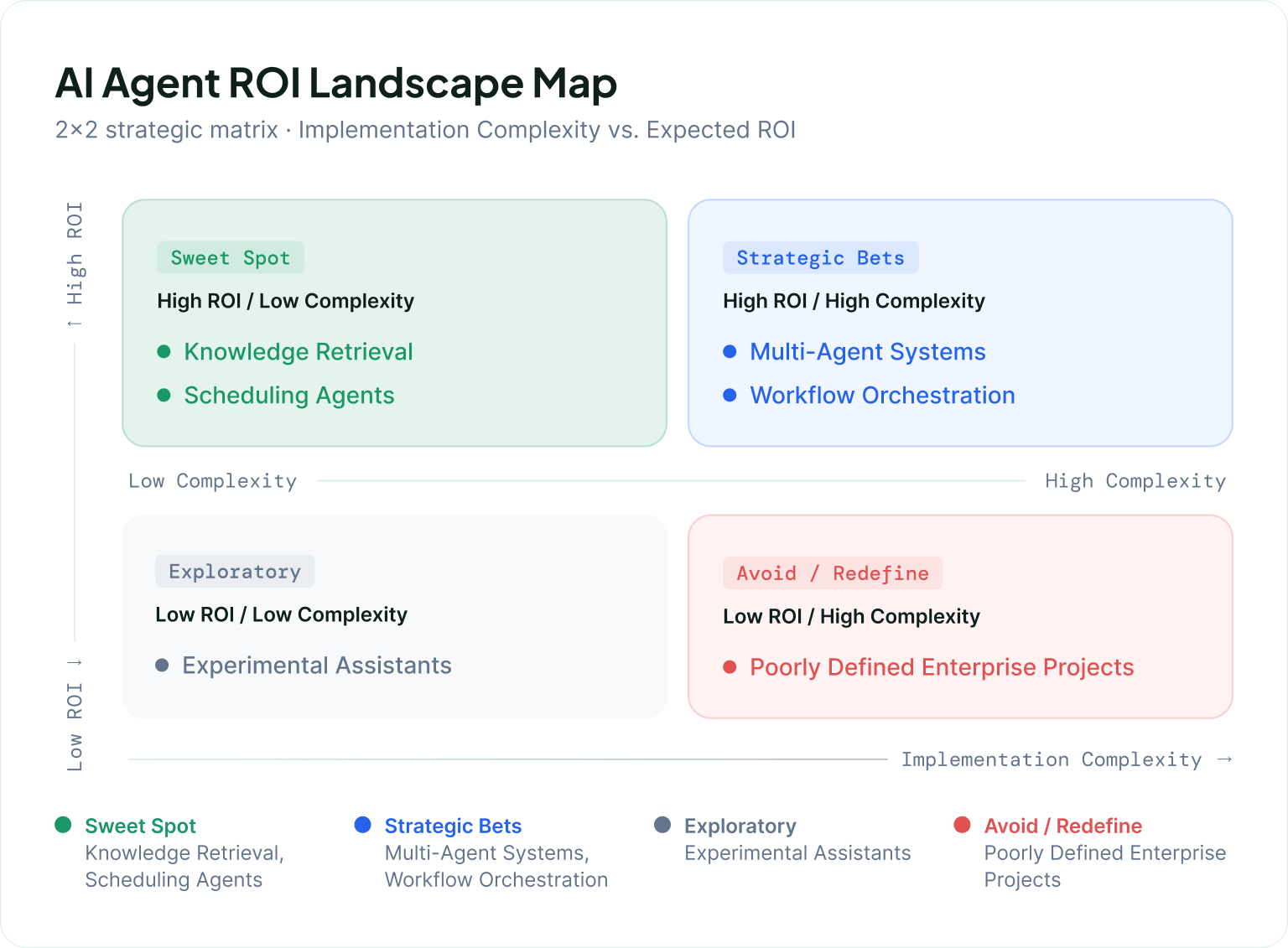
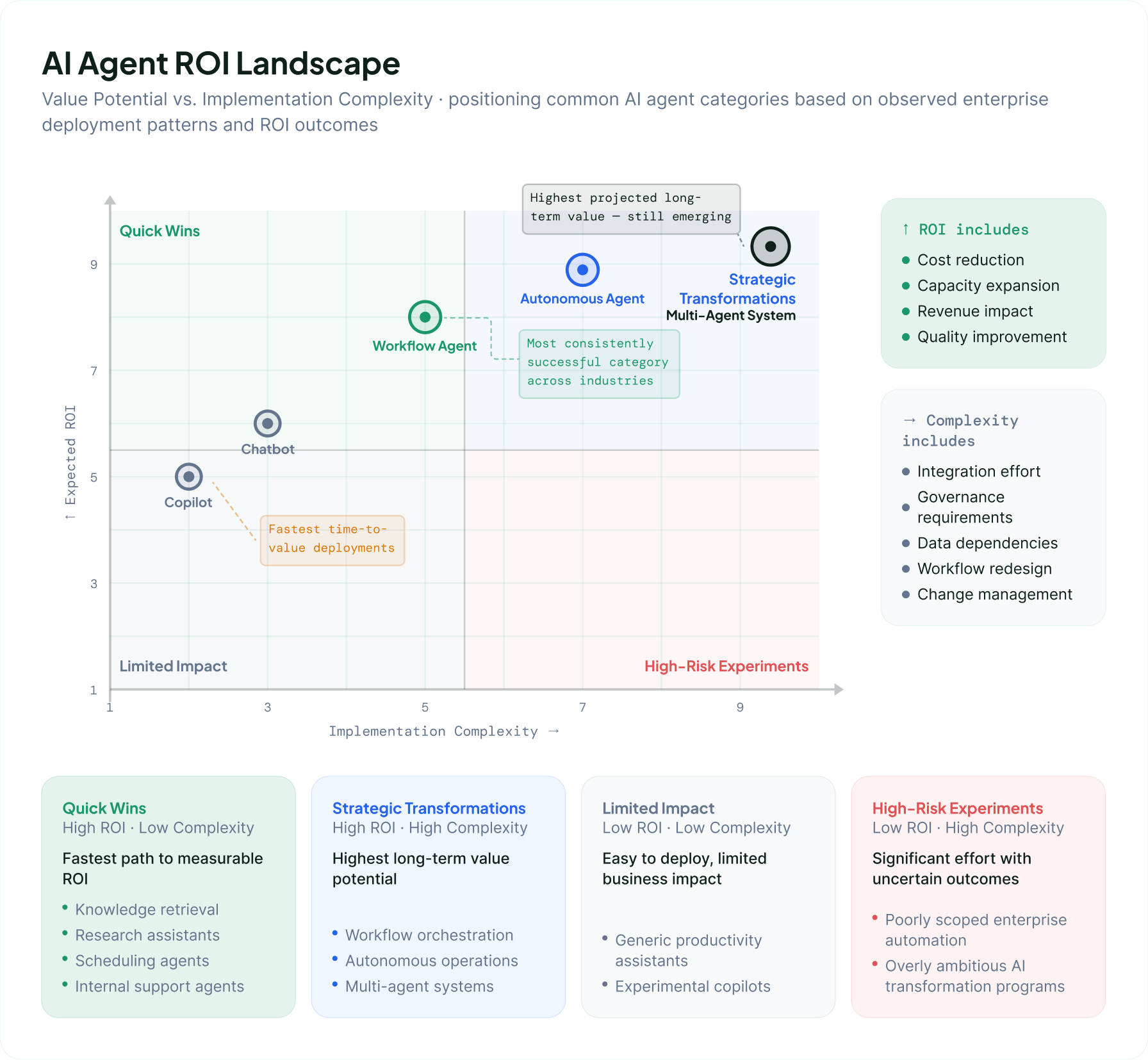
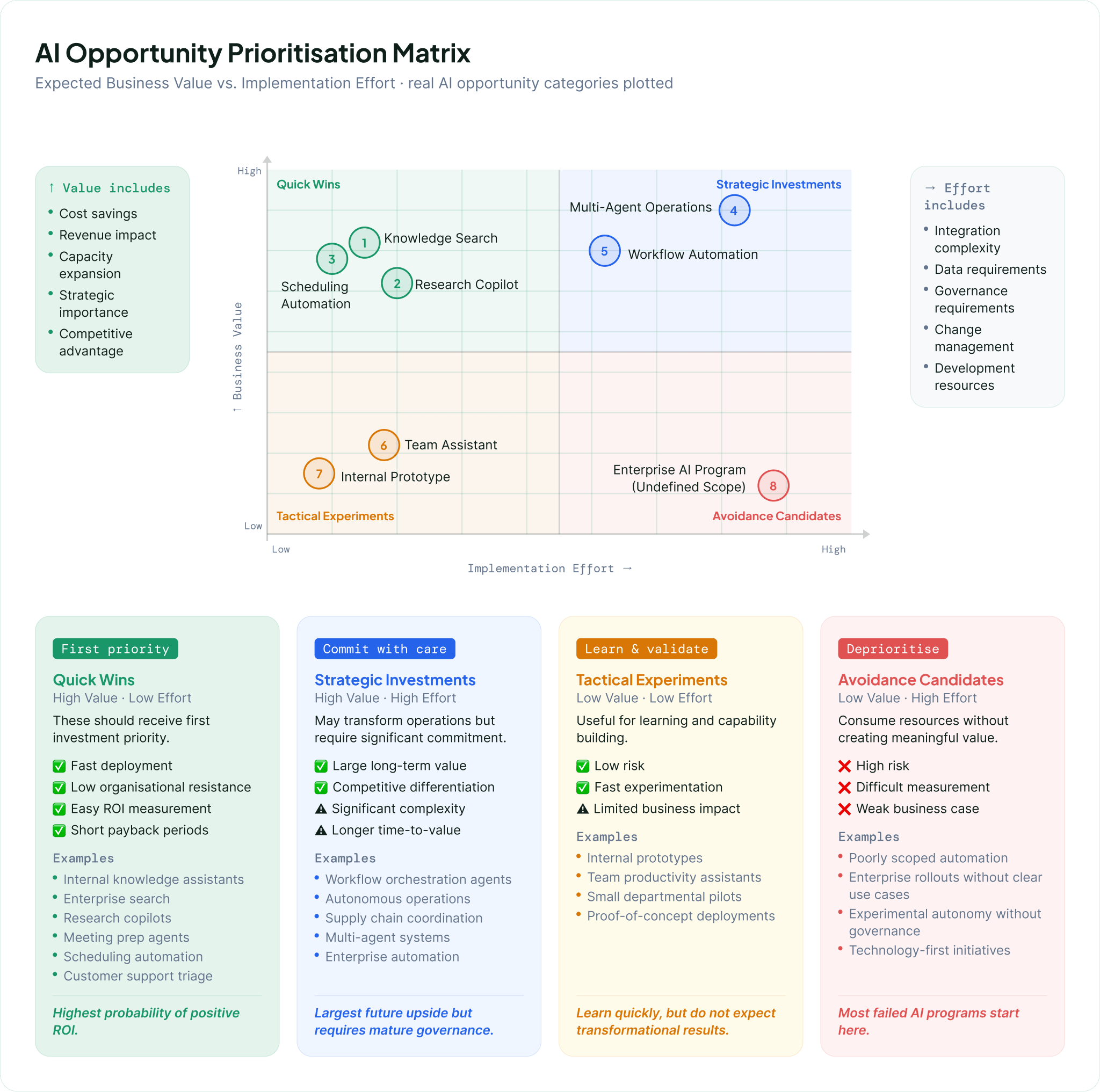
Organizations frequently face dozens of potential AI opportunities. The database suggests prioritizing opportunities based on two dimensions:
Measured through:
Measured through:
This creates four categories:
Quick Wins
High value, low complexity. Examples:
Strategic Investments
High value, high complexity. Examples:
Tactical Experiments
Low value, low complexity. Useful for organizational learning.
Avoidance Candidates
Low value, high complexity. Typically poor investment choices.
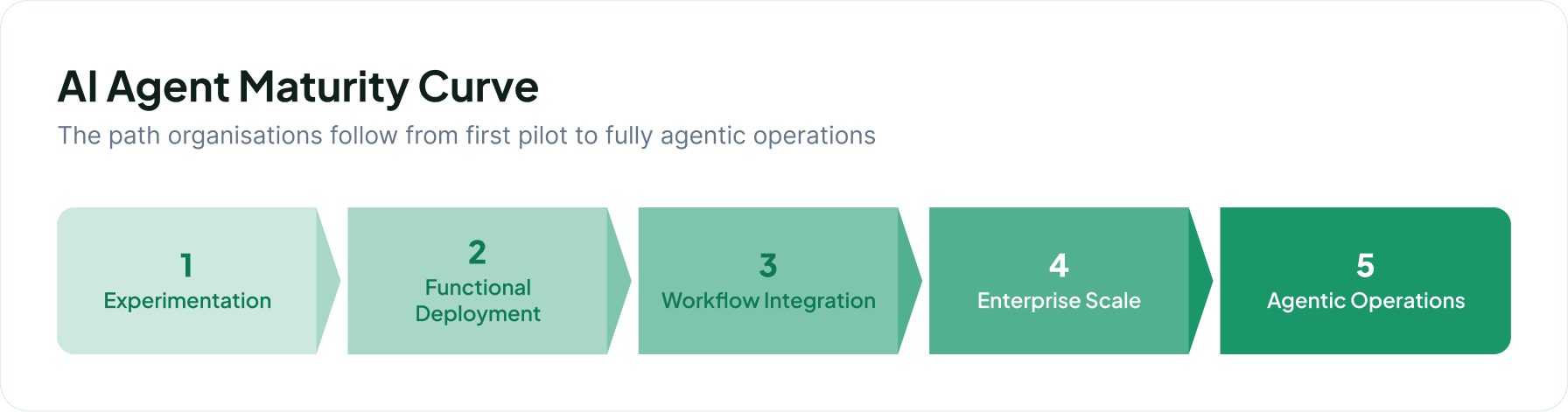
Database evidence suggests that organizations progress through predictable stages.
Stage 1: Experimentation
Stage 2: Functional Deployment
Stage 3: Workflow Integration
Stage 4: Enterprise Scaling
Stage 5: Agentic Operations
Organizations that advance through these stages sequentially generally achieve stronger outcomes than organizations attempting immediate large-scale transformation.
A recurring theme throughout the AI Agent ROI Database is that governance should not be viewed solely as a compliance requirement.
Governance is an ROI driver. Organizations frequently assume governance introduces friction, slows deployment, and increases operational costs. While governance does require investment, the evidence reviewed throughout this database suggests that organizations with mature governance frameworks consistently achieve stronger long-term outcomes than organizations prioritizing speed alone.
Agentic systems increasingly influence:
As operational responsibility increases, so does the potential impact of errors, hallucinations, compliance failures, and uncontrolled behavior.
Organizations that fail to establish governance controls often encounter:
These factors directly reduce realized ROI.
Conversely, organizations that establish effective governance frameworks typically experience:
Governance therefore functions as an enabling capability rather than a restrictive one.
The database identifies four common governance maturity levels.
Characteristics:
Typical Outcome:
Characteristics:
Typical Outcome:
Characteristics:
Typical Outcome:
Characteristics:
Typical Outcome:
Database evidence strongly suggests that organizations progressing toward Levels 3 and 4 achieve superior long-term ROI.
Trust remains one of the most important determinants of realized value. Organizations frequently focus on technical accuracy while overlooking trust dynamics. However, adoption depends on user confidence. Users must believe that agent outputs are:
Without trust:
Trust is therefore both a governance issue and an economic issue.
Successful deployments frequently incorporate:
These controls improve user confidence while reducing operational risk.
Measurement is the foundation of ROI realization. Organizations frequently underestimate the importance of observability infrastructure. Without measurement systems, organizations cannot determine:
The strongest deployments monitor multiple layers simultaneously.
Examples:
Examples:
Examples:
The database consistently demonstrates that organizations measuring all three layers outperform organizations relying solely on technical performance metrics.
Agentic AI remains in the early stages of development. Despite substantial progress, the majority of deployments reviewed throughout the database remain relatively constrained in scope. Most organizations continue to operate within bounded environments where:
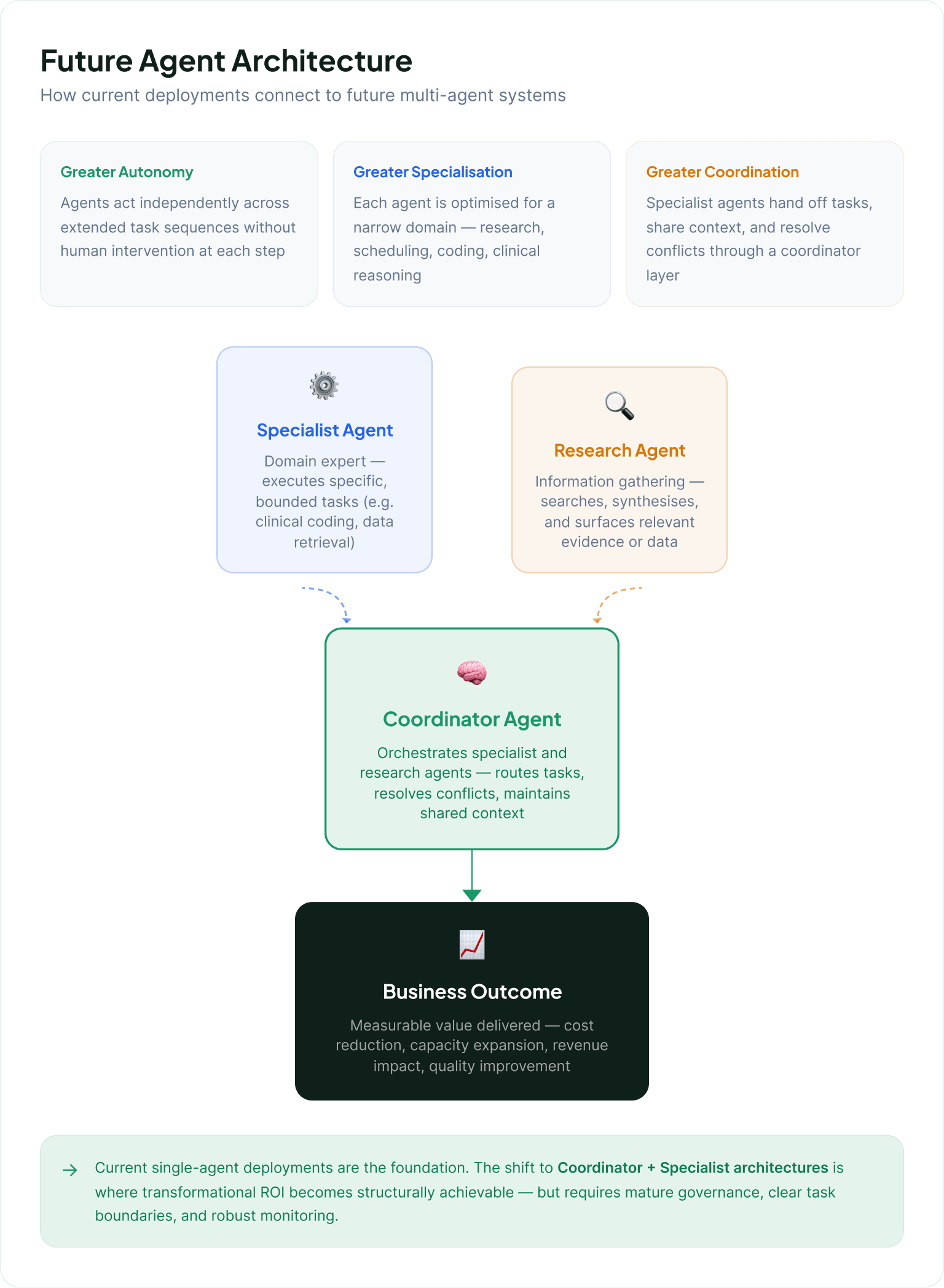
This is likely to change. Research increasingly points toward the emergence of more sophisticated multi-agent systems capable of coordinating complex workflows across organizational boundaries. The next phase of development is expected to involve:
Agents will increasingly:
Organizations will deploy networks of specialized agents rather than relying on general-purpose systems.
Multi-agent architectures will become more common. Different agents will collaborate across:
Agentic systems will become embedded within:
The result will be a shift from isolated deployments toward agent-enabled operating models.
As agent capabilities evolve, ROI measurement frameworks must evolve as well. Traditional productivity metrics will remain important but increasingly insufficient. Future ROI evaluation will likely emphasize:
Rather than measuring individual tasks, organizations will measure complete process performance.
Metrics may include:
Organizations will increasingly evaluate how agents influence customers, suppliers, partners, and stakeholders.
Future ROI models may account for systems that improve over time through learning, optimization, and workflow redesign.
The concept of Agentic ROI introduced earlier in this report is likely to become increasingly important as organizations transition from isolated automation initiatives toward integrated autonomous systems.
Although opportunities are substantial, several risks require attention.
As autonomy increases, governance requirements will become more demanding.
Determining responsibility for agent actions will become increasingly complex.
Organizations may overestimate achievable ROI during periods of rapid technological enthusiasm.
Heavy reliance on agentic systems may create new forms of operational risk.
Regulatory frameworks continue to evolve and may influence deployment economics. Organizations that proactively address these risks will likely achieve more sustainable outcomes.
Based on the evidence reviewed throughout the AI Agent ROI Database, several recommendations emerge.
Start with workflows, not technology.
The strongest deployments address clearly defined operational challenges.
Define success metrics before implementation begins.
Organizations that measure effectively consistently outperform organizations that measure retrospectively.
High-frequency workflows generally produce:
Governance should be integrated from the outset rather than retrofitted after deployment.
Organizations should progress through maturity stages rather than pursuing enterprise-wide transformation immediately.
ROI should incorporate:
rather than focusing on a single metric.
AI leaders should focus on:
Measurement systems are strategic assets.
Consistent methodologies improve decision quality.
Reusable architectures accelerate future deployments.
Data quality remains one of the strongest predictors of success.
Technology alone does not generate value. Value emerges when people, processes, and systems evolve together.
The emergence of AI agents represents one of the most significant developments in enterprise technology since the rise of cloud computing.
Unlike earlier generations of software, agentic systems increasingly perform work rather than merely supporting it. They retrieve information, coordinate activities, execute workflows, communicate with stakeholders, and contribute directly to operational outcomes.
This shift has profound economic implications. As organizations move from experimentation toward production deployment, ROI becomes the primary lens through which investments are evaluated. The challenge, however, is that agentic AI creates value through multiple pathways simultaneously. Cost reduction, capacity expansion, quality improvement, and revenue enhancement frequently interact in ways that traditional evaluation frameworks struggle to capture.
The AI Agent ROI Database was created to address this challenge. By consolidating evidence from enterprise deployments, healthcare implementations, logistics operations, knowledge management systems, research environments, and emerging multi-agent architectures, the database provides a structured framework for understanding how agentic systems create measurable business value. Several conclusions emerge clearly from the evidence.
First, AI agents can generate meaningful ROI across a wide range of industries and operational contexts.
Second, implementation quality consistently matters more than model sophistication.
Third, organizations that combine governance, measurement, workflow integration, and disciplined deployment strategies achieve superior outcomes.
Fourth, the future of AI value creation will increasingly depend on workflow orchestration and system-level performance rather than isolated task automation.
Finally, the organizations most likely to succeed will be those that treat AI agents not as experimental technologies but as operational infrastructure.
The coming decade will likely witness a transition from isolated AI tools toward increasingly integrated agentic operating models. Organizations that establish robust measurement practices, realistic expectations, and disciplined governance frameworks today will be best positioned to capture the opportunities created by this transformation.
The purpose of this report is not to claim that agentic AI guarantees positive ROI. Rather, it demonstrates that measurable value is achievable when deployments are grounded in operational realities, evaluated through consistent methodologies, and aligned with clearly defined business objectives.
As agentic systems continue to evolve, ROI will remain the most important bridge between technological capability and business impact. That bridge is ultimately where sustainable value is created.
https://ctoaccelerator.com/resources/case-studies/agentic-ai-roi-case-studies
https://technovapartners.com/en/insights/roi-ai-agents-real-success-cases
https://bottis.ai/case-studies-roi-from-agentic-ai-deployments-in-2026/
https://www.cleverdevsoftware.com/case-studies/rag-for-healthcare
https://www.cleverdevsoftware.com/case-studies/ai-scheduling-for-clinics
https://www.cleverdevsoftware.com/case-studies/ai-voice-assistant-for-healthcare
https://www.cleverdevsoftware.com/case-studies/rag-based-chatbot-implementation
https://www.techradar.com/pro/agentic-ai-four-ways-its-delivering-on-business-expectations